| TOP OF THE FOLD | Sponsored by |  |
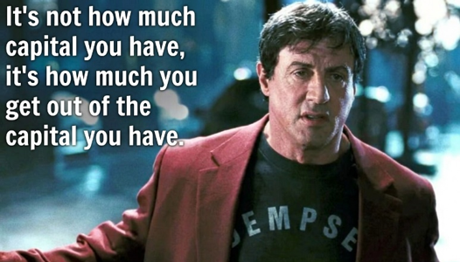
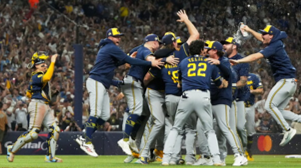
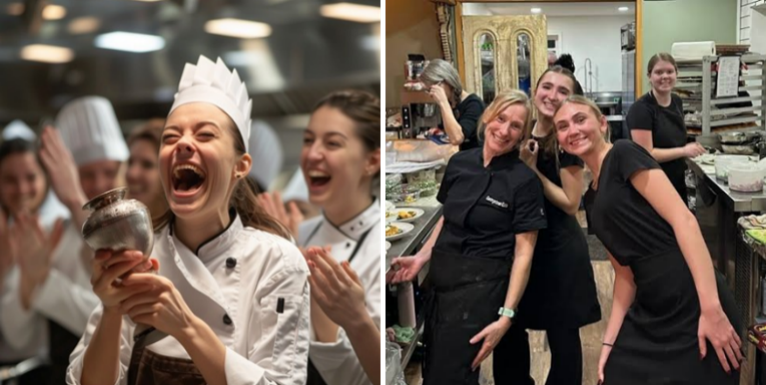
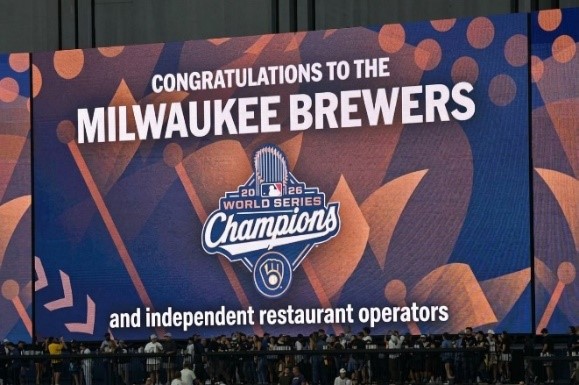
Punching Above the PayrollThe Milwaukee Brewers, from one of the smallest markets in baseball, just won the whole thing. What they did is the exact playbook for the independent operator. by Jimmy Frischling Happy Saturday and Happy Halloween. I hope you had a great week. I've always felt lucky to think of my work as a cerebral sport, and the game I've used as my muse, my inspiration, my Rosetta Stone for just about every business lesson worth learning, is baseball. So please forgive me, b/c on Wednesday night my muse handed me the best gift it's given me in years. The Milwaukee Brewers won the World Series. The first one in the franchise's history, the end of a 57-season wait. And to my loyal Brewers friends, thank you for making a little room for me on the bandwagon. I promise to be a respectful guest. This week's Top of the Fold is of course not a baseball column, so let me say it plainly, so that nobody files this under sports. This is an article about the little guy, it’s about what the little guys can do, the magic they can make, and what happens when a team (and I cannot put enough weight on that word, Team) decides that being smaller is a reason to be smarter. Here's the frame, and then we’ll all move together from the ball field to the dining room. Baseball is the only one of the big American sports leagues with no hard salary cap. No ceiling. The Dodgers and the Mets can spend like it's Monopoly money, north of $340 million on a single roster this year, while the thriftiest clubs take the field with a fraction of that. The only brake is a luxury tax, a toll the rich happily pay. So the sport is tiered: big-market, mid-market, small-market, and the line between the tiers is drawn in payroll dollars. Milwaukee lives at the small end. One of the very smallest markets in all of baseball. And in a game engineered to let money win, the smallest guy in the room just ran the table. The Brewers posted the best record in the National League (97 wins and 58 losses for those interested). Then they swept the Los Angeles Dodgers, the back-to-back champs chasing a three-peat, right out of the playoffs and into their winter. Milwaukee's payroll this year was about $146 million. L.A.'s was north of $340 million. The Brewers spent roughly forty cents on every dollar the Dodgers did, and sent them home in four straight. Let that sit for a second. If that doesn't sound like a baseball story to you, good, b/c it isn't. It's the story of every great independent restaurant that ever beat a chain at its own table. The small-market club and the independent operator live inside the same kind of system, one tilted hard toward the giants. And when either one wins, it wins the same way: by treating scarcity not as a handicap but as a strategy. Here is how that actually breaks down, on the field and on the floor. First, there is no winning the middle. The Brewers cannot walk into a bidding war for a $300 million superstar. Overspend on one name, watch him pull a hamstring in May, and the whole house of cards comes down. You, the independent, cannot out-buy Darden (Olive Garden, LongHorn) or Brinker (Chili's) on procurement power, national ad budgets, or razor-thin supply-chain margins. So you don't play a watered-down version of their game, b/c a diluted copy of the big guy loses to the big guy every single time. You opt out of the commodity game entirely. You build a hyper-specific identity, and you obsess over high-margin, high-efficiency execution. The middle of the road is where small operators go to die. Pick a lane the giants can't fit into. Second, you don't buy success, you manufacture it. When you can't purchase proven talent on the open market, you build an engine that makes your own. The Brewers are relentless at player development and predictive analytics, taking the arm another club waived and fixing his mechanics into a shutdown reliever, turning a guy labeled "a cut" into a high-value contributor. The elite independent kitchen does the exact same thing with a walk-in instead of a bullpen. It isn't buying the prime cut, it's taking pork belly, beef cheeks, the humble and the overlooked, and using technique to turn them into the dish people cross town for, at a margin the prime cut could never deliver. Same roster of raw material, far more value pulled out of it. In baseball they call it player development. On your P&L it's called food cost, and it is exactly where the margin is won or lost. Third, loyalty is a balance-sheet item. For both of these underdogs, the local community isn't just a customer base, it's the engine that keeps the lights on when the market turns. Milwaukee plays in one of the smallest media markets there is, and when the regional-sports-network money fell apart (the Bally and Diamond Sports collapse that gutted local TV revenue for so many clubs), it was the stadium that cushioned the blow. The seats, the gate, the civic pride. You know this one cold. You live and die by your regulars and your neighborhood-destination status. When the delivery apps squeeze your margin or the price of beef doubles, what carries you is emotional equity, the diner who chooses you over the chain on purpose, b/c they want the local owner to make it. You cannot buy that. More to the point, the chain literally cannot. Fourth, small is fast. The single greatest structural advantage of being small is the absence of bureaucracy. The Brewers' front office can pivot in an afternoon, a creative trade, an unconventional defensive shift, an aggressive baserunning call, with no committee and no memo. You can do even better than that. An ingredient spikes at ten in the morning and you've rewritten and reprinted the menu by four. A national chain needs test kitchens, supply-chain re-contracting, and three layers of regional VP sign-off to change a garnish. By the time the giant turns the ship, you've already sailed. Speed is the small operator's cheapest and most criminally underused weapon. So here's the takeaway, and of course it lands on the P&L, b/c it always does. The Brewers did not win b/c they finally outspent somebody. They won b/c they out-executed everybody. It was never the size of the checkbook, it was the efficiency of every dollar inside it. It's not how much capital you have, it's how much you get out of the capital you have, and that is the whole game, in a dugout or a dining room. You do not need the bank account of a Darden to win your market. You need a superior engine for talent, an operation that can turn on a dime, and a community that treats your success as a point of local pride. The giants will always have more money. You have more margin for genius. Spend it. And here's the part that makes the timing almost too perfect. This was the first World Series since 1991 in which both pennant winners ran bottom-half payrolls (shoutout to the Tampa Bay Rays for winning the American League Pennant). In a sport with no cap and no ceiling, the two teams that climbed all the way to the top were two of the thriftiest in the league, and Milwaukee became the first small-market club to hoist the trophy in more than a decade. The market heard the message even if the owners are pretending not to: efficiency is catching up to brute force. It's doing the very same thing in our industry, one great independent at a time. So cheers again to Milwaukee, to the good people who fill that ballpark, and to every independent operator who shows up each day, scarcity and all, and builds something the giants can't buy. You already knew how to do this. The Brewers just put it on national television. I see this 2026 World Series as something all of us, big market and small, can raise a glass to. It takes a village! | | | Your next regular is on Roku  Empty tables cost you revenue you can't get back. Casual diners are already streaming on Roku, and self-serve CTV ads from Roku Ads Manager help you reach them in every market, down to the ZIP code. The result: more diners tonight and more repeat customers over time. | YOUR WEEKEND LISTEN  | The Hospitality Hangout: Ahsan Jiva of Mellow Mushroom Psychedelic art, Holy Shiitake pizza and restaurants with personalities of their own. Mellow Mushroom has spent more than five decades giving people plenty to talk about over a pie. Now it’s adding new ways to order, visit and eventually earn rewards. |
|
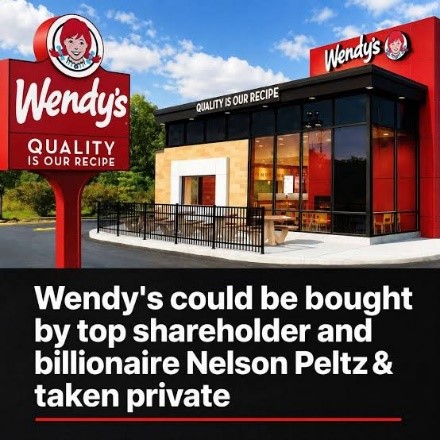
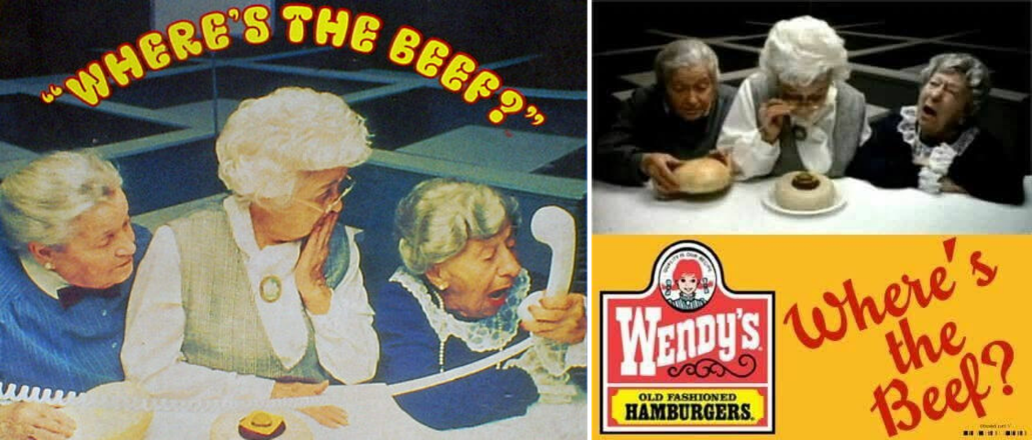
| | | THE DEAL ROOM Where's the Beef? Off the MarketThis week Nelson Peltz moved to do something he’s wanted for years: take Wendy's off the public market entirely. On Wednesday, Peltz's Trian Fund Management filed a proposal to buy the burger chain for about $1.4 billion, or $7.35 a share in cash, and run it private. And Mr. Peltz isn’t going at this alone. His partners include Mr. Greg Flynn and the Flynn Group, the largest restaurant franchisee in the country, alongside Sixth Street Partners and BlueFive Capital. It's an opening bid, explicitly subject to negotiation, and the stock jumped more than 15% on the news. Full disclosure, and a warm one: one of the buyers is an FOB (Friend of Branded). Greg was our guest on the Hospitality Hangout, and Schatzy and I had a ball with him (you can give it a listen here: Being a World-Class Operator: The Secret to Success in the Restaurant Business). To be clear, Branded has no financial interest here, none, not in this deal, not in the Flynn Group, not in Wendy's. Have I enjoyed my share of Wendy’s burgers? Yes, yes I have. Do I dip my fries in their chocolate Frosty? No, no I don’t. Just a genuine soft spot for a world-class operator, so weigh my read of this potential acquisition accordingly. Now read that $7.35 closely, b/c it tells you the whole story. Yes, it's a 20% premium to where the stock closed the day before. It’s also roughly 10% below where Wendy's shares started this very year. Let that sit for a second. The "premium" is only a premium b/c the stock already fell off a cliff. Peltz isn't paying up for a prize. He's making a lowball look generous by catching a falling knife. And Peltz is no tourist here. Trian controls more than 16% of Wendy's, and the man ran the board as chairman for 17 years before stepping down in 2024 (he's chairman emeritus now). He took a run at buying the company in 2022, and again earlier in 2026. This is the same investor who brought Wendy's and Arby's together back in 2008, coming back nearly two decades later to say the public market is no longer the place to fix what's broken. And plenty is broken. Same-store sales have now fallen for six straight quarters. In the second quarter alone, comps dropped 7.9% while traffic fell 12.5%, which means this isn't an accounting wrinkle, actual human beings stopped walking in. Beef prices are up, the competition is relentless, and the C-suite has been a revolving door: Todd Penegor out in 2024, his successor Kirk Tanner gone in about 18 months (he left to go run Hershey), and the chair sat empty the better part of nine months before Bob Wright took it. A genuinely great American brand, the square patties, "Where's the beef?", the Baconator, has been quietly bleeding in full view of a market that grades every miss on a 90-day clock. Which brings me to the pattern, and to this morning's Top of the Fold. I just spent the whole lead on Small Ball, on how the smallest-market team in baseball out-executed the richest giants in the game through efficiency, agility, and alignment. Wendy's is the photo negative of that story. Here’s a giant so large, so layered, and so exposed to the quarterly treadmill that its own longtime architect wants to pull it into the dark just to give a turnaround room to breathe. Scale was supposed to be the moat. Instead, it became the anchor. And look hard at who’s doing the buying, b/c that’s the real tell. Not a strategic acquirer, not a faceless shop looking to flip it in five years. The longtime chairman who still owns 16% of the shares, arm in arm with the single biggest franchisee in the system, the man who actually operates the restaurants. That’s an alignment play, full stop. When the people with the most skin in the game, ownership and operations, link up to take a brand private, they’re betting the fix is operational and patient, not financial and fast. It's the same thesis I laid out a few weeks ago in "Low and Slow": the slow, unglamorous rebuild is nearly impossible to run while an analyst screams about next quarter's comps. So, here's the takeaway, and of course it lands on the P&L. In baseball and in burgers, this was the week the market told you the same thing twice. Size is not strength. A $1.4 billion giant can be dragged down by its own weight in the very same week a small-market roster steamrolls its way to a title. What actually wins, in a dugout or a drive-thru, is execution, alignment, and the patience to do the hard thing without a crowd watching the scoreboard. Mr. Peltz & Mr. Flynn are betting a billion-plus that Wendy's can only find that patience off the market. The little guys just proved you can find it on the smallest budget in the league. I’m cheering for Wendy’s, not just b/c of all the visits I’ve made to the unit in Middletown, CT (along with many other units across the country), but b/c I love a turnaround story and the team that’s about to launch into this one is best-in-class. | | | The complete AI search guide for restaurants  Guests no longer just search online—they ask AI assistants where to eat. Learn practical strategies to optimize your website, profiles, and reviews so AI tools recommend and book your restaurant first. Download Now | | | THE SHOUT OUT, POWERED BY ORACLE Extra InningsNominations for this year's RISE Awards officially closed last week. For Hospitality Headline readers, they just reopened. Here's the deal, and it's a good one. New York State Restaurant Association (NYSRA) is hosting the Fifth Annual RISE Awards (RISE is short for Restaurant Industry Spotlight on Excellence) and the nomination window closed on October 23. NYSRA is reopening and extending it, specifically for H² subscribers. So if you blinked and missed the nomination window, consider this your extra innings. The nomination link is right here: RISE Awards Nomination Form. Full disclosure, and a proud one: NYSRA is a friend and partner of Branded, we offered to run this Shoutout, and as a native New Yorker running a firm headquartered in this state, I'm glad to put our shoulder behind it. So what are we talking about. The RISE Awards are New York's premier state-level recognition of hospitality excellence, and they close with a live gala on Tuesday, January 19, 2027, at the Albany Capital Center. In one of the most competitive restaurant markets on the planet, this is the benchmark for the whole industry: operational excellence, the people who deliver it night after night, and the technology pushing the business forward. And here's the part I love, b/c it connects straight to this morning's Top of the Fold. Eleven categories, and almost every one of them is about people, not P&Ls: Favorite Restaurant, Front of House Team, Back of House Team, Favorite Mixologist, MVP, Rising Star, Caterer of the Year, Favorite Social Media, Community Impact, the Innovation Award (presented by Rational), and the Women in Hospitality Award (presented by Google). That's a roster. That's the talent engine the lead was all about today, the one that wins championships on a small-market budget. Which is exactly why you should do this. Recognition is the cheapest, highest-return thing a leader ever gives. It costs you a few minutes and a nomination form, and it can make a line cook's or a bartender's or a GM's entire year. Think about the person who makes your place actually run, the one whose name never shows up on the P&L but without whom the whole thing falls apart. Put them up for the recognition. The reopened window will not stay open long, so please don't let this one sit in your inbox. Nominate someone today at the link above, then go see the full slate at The Fifth Annual RISE Awards. Go make somebody's January. | | | WHAT WE'RE READING THIS WEEK 🎬 Looks Like the Next James Bond Is 36 Years Old – New York Magazine 📺 Why Nearly 25% of the Country Is Still Watching ‘Seinfeld’ – The Wall Street Journal 🍳 The truth about seed oils: are they really as bad for you as we've been told? – Men's Fitness 👖 The Pants That Define the Cool Millennial Mom – The Atlantic 🏝️ Paris Was Dethroned as the World's Most Romantic Destination—and the New No. 1 Is a Gorgeous Island in the U.S. – Travel + Leisure | | | THE B LIST 10 names to know this weekKnow someone who should be on this list, or someone who'd want to see it? Forward this email or share it with your network! | | | MY POINT OF VIEW by Julie Zucker Did you know the Green Haribo bear is actually Strawberry flavored? And the red haribo is raspberry? Fun trick that is actually a treat. No wonder why the Green bear is my favorite. Another fun fact you may not know (nor really care) is my obsession with Haribo, they are the superior gummy bear and I hold that with strong conviction! Won’t even debate on that! Halloween gives us parents a perfectly acceptable excuse to “inspect” our kids’ candy bags. But those childhood favorites have a place beyond the trick-or-treat bucket. In hospitality, a familiar flavor can take us right back to Saturday morning cartoons, an after-school snack or the house that always gave out full-size candy bars. And getting to feel like a kid again? I’ll order that. This week, a trip down the snack nostalgia rabbit hole followed me all the way to dinner at NYC’s 53, where a cereal shrimp dish got me thinking. From that cereal dusting to the cereal milkshakes Schatzy and I once turned into a series of limited-time offers, there’s a lot restaurants can do with the flavors we already have feelings about. So how does a childhood craving become something worth putting on a restaurant menu? Grab something from your kid’s candy stash and keep reading. Consider it research. Just leave me the green bears. Read this week's POV | | | THE INSIDERS | | | | | | | That's it for today!
See you next week, same bat-time, same bat-channel.
It takes a village! Jimmy Frischling
Branded Hospitality
[email protected] 235 Park Ave South, 4th Fl | New York, NY 10003 Branded Hospitality is a foodservice growth platform with three integrated business lines: Ventures, Solutions, and Media. We invest in innovative tech and emerging brands, provide expert advisory and capital strategies, and amplify visibility through podcasts, newsletters, social, and events, creating a powerful flywheel that drives growth, brand strength, and lasting success. Looking to get in front of 400,000+ hospitality movers and shakers? Dive into our media kit and see how we can help amplify your brand. HOSPITALITY HEADLINE |
|