


|
||||||||||
|
Top of the fold
Be Better than the Gap
How lettuce became the food industry's morality play. — by Jimmy Frischling
|
||||||||||

Friends of Branded! Happy Saturday and I hope you had a great week. Thirty-seven years ago, Spike Lee dropped us onto the hottest block in Bed-Stuy and refused to let us look away. Do the Right Thing, an American independent comedy-drama produced, written and directed by Mr. Lee back in 1989 (that’s right Rat Pack, we’re taking it back to the 80s this weekend), spends its entire run in and around Sal's Famous Pizzeria, on the hottest day of the year, as the temperature (and everything else) climbs toward a boil. Early on, Da Mayor pulls Mookie aside and hands him the only instruction that matters. "Always do the right thing." Mookie: "That's it?" Da Mayor: "That's it." I believe I have pretty decent range, but this isn't a movie review (I'll leave the film-studies essay to people far smarter than me). It's about a pizzeria at the center of a neighborhood, a whole lot of heat, and a simple question our industry is being asked right now. Are we going to do the right thing, or wait for someone to make us? B/c the heat is on. Over the last two months, a Cyclospora outbreak tied to shredded iceberg lettuce has produced 1,644 lab-confirmed illnesses across five states (Indiana, Kentucky, Michigan, Ohio and West Virginia) and put 94 people in the hospital, with illness dates running from mid-May to mid-July. |
||||||||||

The lettuce moved through Taco Bell locations and reached retail as far as Walmart shelves in more than two dozen states. The FDA has kept its focus on Taylor Farms lettuce from Mexico, even after a lab test that first came back positive for the parasite was retracted as a false positive. There's no confirmed positive product test to date; the case rests on the epidemiology. Taylor Farms, to its credit, voluntarily recalled central-Mexico iceberg on July 17 and says it's done sourcing it for the season (and with that clearly stated, I see no reason for any exploration of defamation coming at me). Now here's the part that should make every operator put down their coffee (just for a quick moment). We already have a tool for exactly this moment. It's called the Food Traceability Rule (FSMA 204), and it requires the farm-to-fork records that turn a three-week guessing game into a same-day trace. But wait, there’s more. Leafy greens sit right at the top, the pole position, the zenith, numero uno, head of the class (you’re getting what I’m throwing down, right?) of the covered list. The compliance date for that was supposed to go into effect on January 20, 2026, was pushed out 30 months, all the way to July 20, 2028. Read that again. The single regulation designed to find contaminated lettuce faster got delayed by two and a half years. When the FDA delayed the enforcement of FSMA 204, some organizations took it as breathing room, but the importance and need for traceability didn’t pause and expectations from consumers most certainly didn’t take a break. So, here's my New Rule, (although it’s really Da Mayor's). Let’s do the right thing, and not wait for Washington to do it for us. And this is where I get optimistic, b/c the private sector doesn't have to wait (and frankly, it shouldn't want to). Government enforcement is reactive by design. It shows up after people are already sick, subpoena in hand. Private enforcement is continuous. Modern commercial food networks already run on millions of legally binding insurance and supply contracts, and those contracts already demand frequent third-party audits and ongoing technical testing, all funded by the private sector (no appropriations bill required). The leverage here is extraordinary. If Corporate America collectively decides it will no longer buy from un-monitored facilities, those facilities modernize or they're out of business by the end of the quarter, not by 2028, overnight. |
||||||||||

And the incentive isn't charity. It's math. An outbreak like this one is a P&L event: recalls, lost weeks of sales, litigation, and the most expensive line item of all, a dented brand. The companies with the power to fix this are the exact same companies with the most money on the line if they don't. Power + Incentive = No Excuse to Wait. Full disclosure, and you know I'll always give it to you straight. One of the companies building the rails for exactly this is Starfish Network, a Branded portfolio company, so please weigh my enthusiasm accordingly. Starfish is the "neutral connectivity layer" for the food supply chain that connects growers, processors, distributors, retailers and operators through the systems they already run, instead of ripping them out. 80+ pre-built integrations, built to satisfy FSMA 204, FSVP and EUDR whether or not the feds are checking. To be clear, this week’s Top of the Fold isn't about the vendor. The point is that the technology to trace a head of lettuce in hours instead of weeks already exists, on private rails, available today. The mandate got delayed. The capability did not. Which brings me to a different movie, and a line I think about more than I'd like to admit. In “Crazy, Stupid, Love,” a romance-drama from 2011 (look at me being far more current), Ryan Gosling's Jacob takes a rumpled, defeated Cal (Steve Carell) under his wing, sizes up the sad khakis and the white sneakers, and delivers the mandate: "Be better than the Gap." It isn't an insult to the Gap (I’m wearing something from the Gap at this very moment that I’m writing this). It's a challenge to Cal. Stop settling for the safe, off-the-rack default. Become the better version you're fully capable of being. Friends, that's us. Right now, the government floor is the Gap. It's the default, and it just told us it won't even show up until 2028. We can be better than that floor. We should be better than that floor. And b/c of what's actually at stake, we have to be better than that floor. We don't need Washington to write our rules. We can write them ourselves, hold each other to them, and prove to consumers that we're not going to let an understaffed, reactive agency dictate our risk management. And if "be better" still sounds like a nice gesture, look harder at the downside. A single brand can survive an outbreak. A category might not. Every headline that teaches a nervous parent to fear the bagged salad, the leafy green, the fresh-and-local promise we've spent a generation selling, chips away at demand for the entire category, not just one label. That's the real financial incentive, and it's existential. Sit on your hands, and you're not risking a soft quarter. You're risking category destruction. So, what do you actually do Monday morning? You stop treating traceability as a compliance cost that you'll get around to in 2028 and start treating it as a purchasing standard you enforce now. Write it into your supplier agreements. Ask your distributors what they can trace, and how fast. Make "un-monitored" a deal-breaker, not a discount. The operators who can tell a nervous guest exactly where their food came from (before the CDC issues a number) are the ones who'll keep that guest. Radio Raheem wore it on his knuckles. LOVE and HATE. Our industry's version is simpler. Consumers are deciding, right now, whether they trust us with the most intimate thing there is, what they put in their bodies. We can earn that trust by proving corporates move faster than government, or we can wait 30 months and let the next outbreak decide for us. Be better than the Gap. Do the right thing.
It takes a village!
|
||||||||||
Your weekend listen
|
||||||||||
|
Happier Employees. Happier Guests.

Give your hotel or restaurant team access to their earned wages before payday*. Overcome hiring shortages and boost shift compliance with the gold standard in modern pay.
Book a Demo
|
||||||||||
|
1 + 1 = 11

If this week's Shoutout had you thinking about your people, good. Keep the thread, b/c the smart money is thinking about them too. Here's the "deal," and it's an unusual one for this section: there isn't a single signed transaction to report. There's something more interesting. On July 30, our friends at Workstream are hosting its On The Clock Summit (OTC26) at The Starling in Atlanta, pulling operators, HR leaders and payroll chiefs into one room, with a stage that includes CKE's Joe Guith, a Papa John's franchisee, a Bojangles operator, and a lineup of QSR heavyweights. On paper, it's a people-operations conference, but read the guest list through the lens of a banker, and you start to see something else. A room full of our industry's most important asset (our people), and the people who allocate capital against it. Consider the category forming around that room. Workstream, which handles hiring, onboarding, scheduling, payroll and compliance for the hourly workforce, now counts 46 of the top 50 restaurant brands as customers (Taco Bell, Culver's, Arby's, Five Guys, Bojangles). It has raised north of $100M and was valued around $500mm in its last priced round. Now pair it with this week's Shoutout subject, DailyPay, and you can see the shape of a whole "people stack" getting built and funded. Hire them, onboard them, schedule them, pay them (early), keep them. That's the pattern worth your attention. For a decade, restaurant-tech capital chased the guest: ordering, delivery, loyalty, the drive-thru. Respect. The next wave is chasing the team. People operations has quietly become an investable category, b/c in an industry where turnover is the tax that never stops, whoever owns the hourly-workforce stack owns a line that hits every operator's P&L. Which is why, heading into this event, I feel I’ve had more conversations about partnerships and deals around this one event than almost any he can remember. When the category's players and their would-be partners gather in one hotel to talk about the same problem, the math changes (and I’m not talking about 1 + 1 = something better than 2. I’m talking about 1 + 1 = 11). So, here's my take, and I'll happily be graded on it later. Put a bookmark on July 30. I don't think I’ll cover OTC26 as a conference recap. I think we look back on it in a few months as the place where a handful of partnerships and combinations got their first handshake. The Deal Room's job is to tell you where the puck is going. Right now, it's going to the people stack. Bookmark it.
If you’ll be out at Workstream’s “On the Clock” and would like to connect, please click here or contact me directly.
| ||||||||||
|
NetSuite Meets AI: Practical Lessons and Strategies

AI is reshaping financial operations in NetSuite, delivering practical gains for finance teams and IT leaders. This guide, authored by industry expert Tim Dietrich, explores actionable strategies for adopting AI responsibly, from prompt-driven financial analysis to purpose-built AI agents and proven governance frameworks.
Get Your Guide
|
||||||||||
|
What we're reading this week
|
||||||||||
|
The Future of Pay(day)
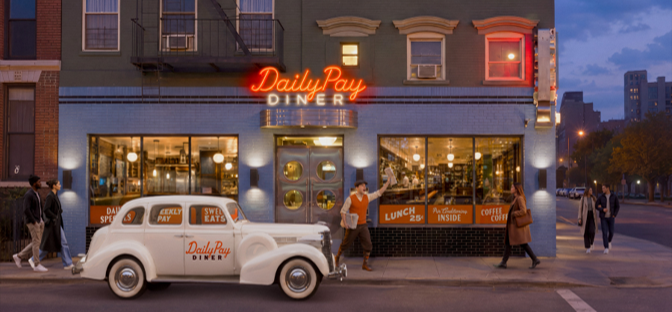
SHOUTOUT: DailyPay, the Remedy Diner in lower Manhattan, and a mission to modernize payroll This week, our new friends and partners at DailyPay took over a diner. That’s not a metaphor. They turned the Remedy Diner in lower Manhattan into "The DailyPay Diner" and convened a roundtable to chew on a deceptively simple question: why, in 2026, do we still pay people the way we did in 1938? That's the year the Fair Labor Standards Act set the rules of the modern American paycheck, and nearly a century later the two-week pay cycle is basically untouched. Your team earns money on Monday and waits until Friday (or the Friday after that) to touch it. Rent, gas and the electric bill, of course, don't run on anyone's payroll calendar. I was fortunate to be invited to a small roundtable with DailyPay's CEO, Nelson Chai, and COO, Andrew Brandman, alongside about a dozen executives from across industries. We ran it under the Chatham House Rule, so I'll leave the room where it was and just share the takeaway I can't shake: after health benefits, access to your own earned wages is climbing toward the top of the list of what employees actually want. Not a perk. A near-essential. For our industry, that should land hard. Hospitality runs on hourly labor and lives with turnover that would give any other sector a heart attack. Every walk-out is a hiring cost, a training cost, and a service-quality cost. So, here's the pitch that's tough to argue with: letting people tap wages they've already earned, before payday, is one of the cheapest retention levers on the board. DailyPay's own numbers back it up. 59% of workers say on-demand pay influences where they'll take a job, and at one large employer, turnover in the first two weeks on the job fell 58% among the people using it. Best part for operators (b/c I know what you're thinking): it plugs into the payroll and HCM systems you already run, like ADP, Workday, SAP and Oracle. This isn't a rip-and-replace. It's a switch you flip. The money your team earned is already theirs. In 2026, making them wait two weeks to reach it is a policy choice, not a law of nature. Branded prides itself on being an operator-centric platform. That little bit of word-salad means that we focus on technology that helps operators take care of THEIR guests, THEIR employees, THEIR stakeholders. No wolves in sheep’s clothing. Tech that helps operators win b/c let’s face it, if operators don’t win, the hospitality industry fails. Branded has partnered with DailyPay b/c we believe that as employee expectations continue to evolve and financial flexibility becomes an increasingly important part of the workplace experience, payroll needs to modernize. We believe employers are looking for meaningful ways to support financial wellness, improve retention, and meet workers where they are and that On-Demand Pay is increasingly being recognized as a valuable workplace benefit. So, if Branded is going to dive into this, we wanted to do it with our new besties at DailyPay, who also just happens to be widely recognized as the top-ranked and most adopted earned-wage access platform. Hospitality is a people business, and it starts with the need to take care of our people. If you’d like to discuss what Branded is doing with DailyPay or how you can get involved, you know what to do. Call me. 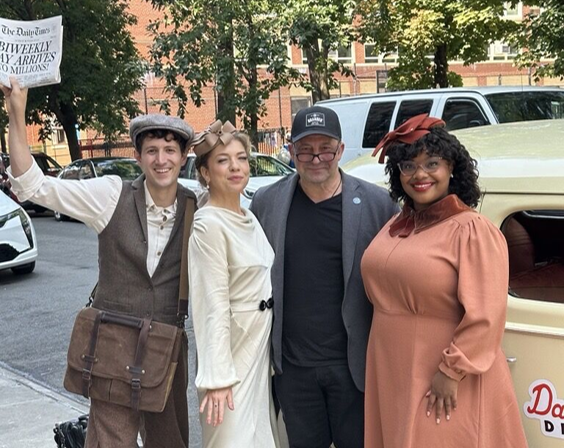
|
||||||||||
|
The b list
10 names to know this week
Know someone who should be on this list, or someone who'd want to see it? Forward this email or share it with your network!
|
||||||||||
|
My point of view
by Julie Zucker

|
||||||||||
|
This weekend is Visiting Day at sleepaway camp. But before every camp parent makes the drive to the woods, there's one very important assignment... the food wish list. From Jersey Mike's and Starbucks Pink Drinks to Crumbl Cookies and hometown favorites, these kids aren't asking for "a sandwich" or "a cookie." They're asking for brands. And after seeing hundreds of camp wish lists, I realized they're giving us a fascinating look at customer loyalty in action. This week, I'm diving into why a camper's craving for a taste of home might be one of the best reminders of how restaurant brands earn lifelong customers... one childhood (food) memory at a time. |
||||||||||
|
The insiders
|
||||||||||
|
||||||||||
|
||||||||||
|
||||||||||






See you next week, same bat-time, same bat-channel.
It takes a village!
Jimmy Frischling
Branded Hospitality
[email protected]
