TOP OF THE FOLD | Sponsored by |  |
The Odd CoupleAmazon swapped Grubhub for Uber Eats this week. The bigger story is how many layers now sit between your kitchen and your guest. by Jimmy Frischling 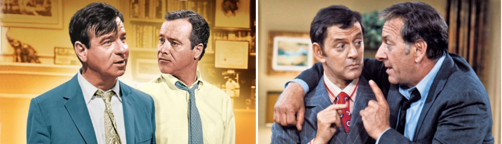
Friends of Branded! Happy Saturday and I hope you had a great week. In 1965, the great Neil Simon put two divorced men in one Manhattan apartment and called it The Odd Couple. Felix Ungar is a fussy neat freak. Oscar Madison is a sportswriter whose apartment looks like a crime scene. They have no business living together, and they do it anyway, b/c neither one can make it work alone. It became a Broadway hit, then a 1968 movie with Jack Lemmon and Walter Matthau, then a TV series with Tony Randall and Jack Klugman that ran in reruns forever. The TV show never cracked the Nielsen Top 25 during its original run from 1970 to 1975 and was saved from cancellation every single year before becoming a massive hit in syndication. That was lucky for me b/c it was from the reruns that I was introduced to and fell in love with the show. One of my favorite quotes (that I use more often than any member of the Branded team likes) comes from the Odd Couple: “you should never assume, because when you ASSUME, you make an ASS out of U and ME.” The Odd Couple - Assume 
I know, I know, I know. I promised the Rat Pack I would be more current with my pop culture references, and here I am opening with a play from the Johnson administration. 😊 This week's Top of the Fold is about a different odd couple, one that moved in together on Thursday, November 5th, and the many restaurants that are going to be cooking for both of them. Amazon ended its Grubhub partnership and made Uber Eats the restaurant delivery partner for U.S. Prime members. Much has been written about this change, and no one needs me to explain how this partnership works, but if you’re looking for that type of intel, here are two links to help you understand it: From Uber - Amazon Partnership FAQ From Amazon - Uber Eats with Amazon Prime This partnership was no small announcement and Wall Street noticed. DoorDash shares fell roughly 13% to 14% on the day of the announcement. Uber slipped about 2% too, which tells you the market isn't fully sure who got the better end of this. After including Neil Simon in this week’s TOTF, let’s now show some range and include the great Billy Shakespeare and channel his phrase, Strange Bedfellows. In The Tempest, a jester named Trinculo gets caught in a storm, crawls under a cloak next to Caliban to wait it out, and says, "Misery acquaints a man with strange bedfellows." Notice the order of operations: storm first, bedfellows second. Amazon and Uber have spent the better part of a decade on opposite sides of the bed. So, what's the storm that brought them together? Hello DoorDash! Follow the money friends. On October 29th, DoorDash agreed to acquire Instacart for $17 billion. Restaurants and groceries under one roof. And here’s a fun footnote: Bloomberg reported that Instacart held talks with Uber before walking away. So, Uber lost the grocery partner it wanted, and a week later landed the retailer nobody saw coming. Depending on whose data you trust, DoorDash holds somewhere between roughly 60% and two-thirds of U.S. food delivery, Uber Eats roughly a fifth to a quarter, and Grubhub mid-to-high single digits. Then there's Walmart, which got into restaurant delivery this year: Subway in June, Dunkin' in September, ordered in the Walmart app and delivered on Walmart's own last-mile network. Walmart says its stores sit within 10 miles of about 90% of the U.S. population. That's not a delivery app. That's a delivery footprint. When the biggest food delivery player in the room is buying the grocery leader and the biggest retailer in the country is building its own restaurant channel, old rivalries get very friendly, very fast. 
This is Amazon's third swing at restaurant delivery (and readers of H^2 know how much I love the magic number that is “3”). 😊 First, it built a network (Amazon Restaurants) and shut it down. Then it rented one (Grubhub), with warrants for an equity stake that it cashed out in December 2024. Now it's renting a bigger one. The lesson is clear: Amazon doesn't want to be in the restaurant business; it wants to be in the Prime retention business. Swapping a single-digit-share network for one with roughly a quarter of the market, across nearly 10,000 U.S. cities and towns, makes a $139-a-year membership a lot stickier. For Uber, this is the counterpunch. Amazon has an enormous U.S. Prime base (it doesn't disclose the number, but outside estimates run north of 180mm), and Uber now gets a seat in front of it without paying to win each of those customers one at a time. It also keeps DoorDash from cutting the same deal, but the deal Uber cut comes with a concession: on these orders, the customer opens Amazon, not Uber. Uber is trading app traffic and the direct relationship for volume and scale. That's a real trade, and the 2% dip suggests not every investor loves it. Amazon wants to own the front door. Uber is now positioned to own the back door. So, who owns the kitchen? Who owns the guest? Where does this all leave the restaurants? For twenty-plus years, the delivery platforms intermediated the restaurant. DoorDash, Uber Eats and Grubhub got between the kitchen and the diner and, little by little, took ownership of the guest. Now the retailer is intermediating the intermediaries (the delivery platforms). That's two layers between the person cooking the food and the person eating it. Operators, are we being reduced to fulfillment centers? 
Not literally. Our name is still on the listing, and our food is still in the bag, but functionally, this model treats a restaurant a lot like a third-party seller in an Amazon warehouse. And here comes the hard truth, when you're competing inside a retail super-app, you're competing on promos, delivery times and price filters, not on your story or your hospitality. That's how a brand slowly becomes a SKU (stock keeping unit). A few weeks ago, in "Party of the Second Part," I wrote that round one of the delivery wars was about convenience and logistics, and round two is about who owns the customer relationship. Round two just got a new contestant, and for now, the answer to "who owns the guest" on these orders is the company with the cardboard box and the smile on it. Let’s focus on the operators here b/c that’s where Branded likes to play. We will, however, hold to the same rule as last time: zero third-party bashing here. These platforms drive real volume, and for plenty of operators, incremental orders are what cover fixed kitchen costs on a slow Tuesday. Prime is about to send more of those orders your way. Here’s the point, the job isn't to refuse them, it's to price them, plan for them, and convert them. Below are a few ideas I’d suggest considering. Engineer the menu for $25 b/c that new threshold is a gift if you build for it. Family bundles, combos and high-margin add-ons push carts past $25 while protecting your food cost. A $23 average check is now a problem worth solving. Packaging companies just became even more important b/c you need to make your bag a billboard. Amazon owns the checkout, but you still own what's inside the bag. QR codes, bounce-back offers and loyalty sign-up incentives are how a one-time Prime order becomes a repeat direct guest. It's the only marketing real estate on this order you control, so use it. Separate the dining room from the loading dock. If Prime delivers the volume spike, don't let it land on your dine-in guests. Dedicated packaging stations, an off-premises menu built to travel, and clear staffing for both. Nobody at table 12 should be waiting on their entrée b/c a courier is waiting on a family bundle. Know your channel P&L. Run the numbers on these orders separately: commission, packaging, labor, promo cost. If you can't say what a Prime order actually contributes, you don't have a channel strategy, you have a ticket printer. Here's the line I'd tape above the expo station: Volume pays the rent. Data builds the equity. Take the volume. Just don't confuse it with owning the guest. Felix and Oscar never really changed each other. They moved in together b/c the rent made sense, and they spent every episode guarding their side of the apartment. Amazon and Uber are no different. This is a transactional arrangement between two companies that will keep competing on delivery, advertising and robotaxis long after this press release fades. They'll split the rent as long as the storm keeps blowing. The restaurant, meanwhile, is the one doing the cooking. Just make sure you're not also the one stuck doing the dishes. Please be sure to continue to The Deal Room, b/c the delivery landscape has an emerging player and it’s proving that what’s old is new again, b/c First-Party delivery is making its return. It takes a village! 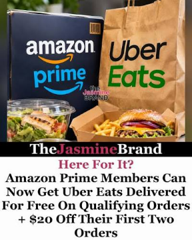
|