|
TOP OF THE FOLD Chasing the Catering Grail Uber just paid $2.3 billion to tell operators where the margin is. by Jimmy Frischling  |
Friends of Branded!
Happy Saturday and I hope you had a great week.
To be, or not to be, that is the question.
Four hundred-some years later, it's still the most famous line Shakespeare ever wrote, a man standing alone on a stage, agonizing over the biggest decision of his life. And despite the four hundred-some years, I still chose to use a photo of Mr. Mel Brooks from his 1983 film, To Be or Not to Be as my image for this week’s edition (Rat Pack, 1983 my friends, it was a good year for comedy!).
Final comment on the photo of this week’s edition, Mel Brooks is a hero to Schatzy and the next time you see or speak with him, please ask him to show you the photo he has of Mel, himself and his three sons.
It’s a great story (but not necessarily a great photo). IYKYK.
This week's Top of the Fold is of course not a theater column and besides, my ability to walk you through Hamlet in iambic pentameter is extremely limited. The Top of the Fold is about a decision a lot of restaurant operators are still agonizing over when, frankly, they shouldn't be, b/c this week the market handed us a $2.3 billion answer.
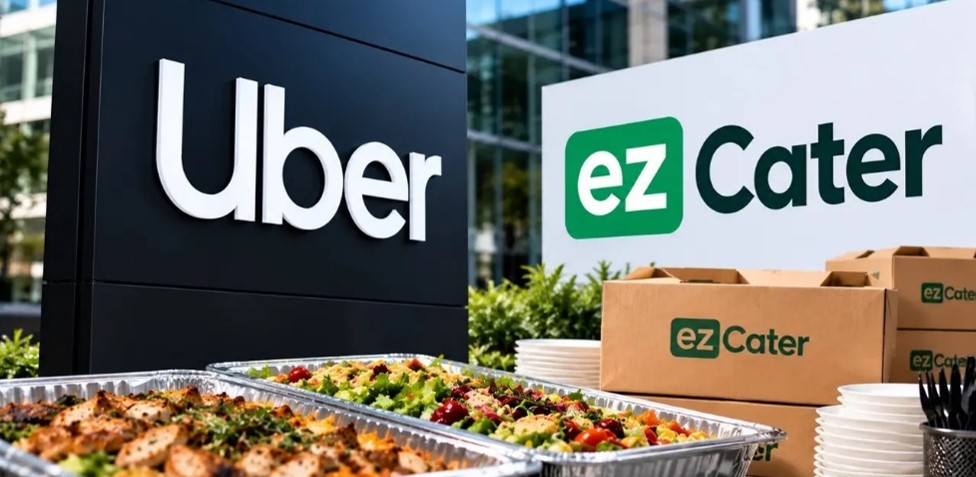 |
Here's the news. On Monday, Uber, one of the largest delivery companies on the planet, agreed to acquire ezCater, the largest workplace-catering marketplace in the country, with roughly 140,000 restaurants on it, for $2.3 billion in cash. A giant buying a giant. A multi-billion-dollar deal that's going to make a lot of noise. Respect.
Power to the big dogs, right? Not exactly, b/c this isn't really a story about the big dogs, and that's the part I need operators to understand.
When the smartest, most ruthlessly data-driven company in food delivery spends $2.3 billion in cash, that is not just a transaction. It's a flare. It's Uber standing on the stage and announcing, to anyone paying attention, exactly where it thinks the margin is going. And they're pointing dead at catering. So, the real question this week isn't about Uber. It's about you. To cater, or not to cater? And I'd argue there is no question at all.
Let me make the case, b/c the math is almost unfair. In an industry built on razor-thin margins, catering lets a restaurant transcend the single most limiting number in its entire business: the seat count. Your dining room has a hard ceiling. Four walls, so many tables, so many turns a night, and that's your revenue cap. Catering blows the roof off. It turns your existing kitchen into a high-volume revenue engine that doesn't care how many chairs you own.
Start with the ticket. The average catering order runs around $350. That is roughly ten times a standard $35 dine-in check, off the same kitchen, the same staff, the same menu. Corporate drop-offs routinely run $200 to $2,000 and up. A single 50-person wedding can clear $4,000. And b/c these orders are booked, planned, and prepaid for in advance, the financial uncertainty basically disappears. You know exactly what to buy and exactly what you'll make, which means the food waste that quietly bleeds a restaurant on a slow Tuesday goes to nearly zero.
Predictable, prepaid, high-ticket revenue. In this business, that's oxygen.
Okay, that was admittedly a lot of math for a Saturday morning, so let’s bring some qualitative factoids into the mix b/c it’s the part I love the most about this story, it’s found money!
 |
Most corporate catering gets prepped in the early morning and mid-afternoon lulls, the exact dead hours between your rushes when your team is standing around and your rent is still running. Catering fills that dead time with high-margin work, using a kitchen you already built, a staff you already employ, and a menu you already perfected. No new lease. No new buildout. The barrier to entry is almost nothing b/c you already own the hard part. You are quite literally monetizing the clock.
And the demand is sticky in a way a wedding never is. Workplace catering has gone from occasional luxury to standard corporate perk, the carrot companies are using to pull people back to the office. Unlike the bride planning one party for one day, the office manager and the HR team and the exec booking Thursday lunches are a recurring, high-frequency account, ordering weekly or monthly, year after year. That's not a transaction. That's an annuity.
Then there's the marketing none of us could buy if we tried. Catering takes your food out of your four walls and sets it down in front of 50 people who may never have walked past your door. That corporate lunch isn't just a $500 order. It's a live tasting for 50 new prospects, half of whom become dine-in regulars, takeout orders, or the person who books your room for their own company's next event. No ad spend converts like a great brisket on the conference-room table.
Put it together and you understand why the U.S. catering market is projected to blow past $109 billion by 2030, and why Uber just wrote a ten-figure check to own a piece of it.
So here's what I actually want operators to take from this week’s Top of the Fold, b/c there's a lesson and there's a warning, and you need both.
The lesson is the easy one. Catering has officially graduated from side hustle to the primary battleground for high-margin growth. For years, the delivery apps squeezed us with steep commissions on tiny $35 consumer orders. Now the same players are sprinting toward corporate group orders where the average ticket clears $400, b/c the economics are simply better. If your menu isn't built to feed groups, you are leaving the single most profitable corner of this industry sitting on the table. Read that as your sign to build the arm.
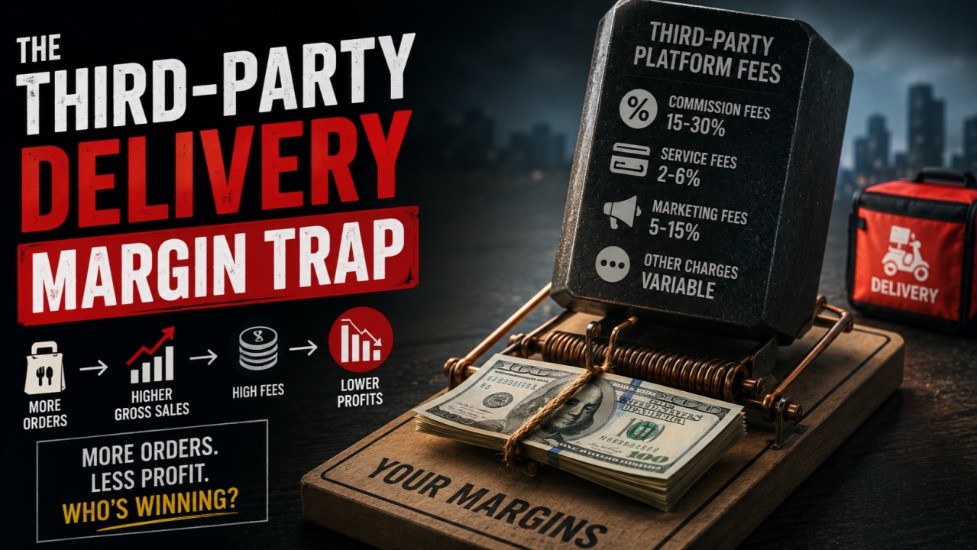
The warning is the one that keeps me up at night, b/c we have seen this movie before (and it’s a pretty scary one). It's the dependency trap. The same way restaurants got hooked on third-party marketplaces for everyday delivery and then watched the commissions eat their margin, this deal threatens to consolidate the corporate catering channel under one roof. And whoever owns the corporate client owns the pricing power. So, play it the right way. Use the combined Uber-ezCater machine for exactly what it's great at: a top-of-funnel, a pipeline of pre-vetted corporate leads you could never reach on your own. But the second you win that client, move heaven and earth to pull their repeat business onto your own direct channel, your phone, your site, your relationship.
Rent the introduction. Own the marriage.
 |
And here's where I'll put my own cards on the table, b/c Branded has real skin in this game.
We're investors in Disco Cater, a premium, nationwide catering marketplace built to connect businesses, office managers, and event planners with hand-vetted local restaurants. I bring it up b/c this deal doesn’t mean one giant swallows the entire category. It means the category is finally big and valuable enough that there is real room at the table (pun absolutely intended) for focused, curated platforms to carve out their own lane, the ones that compete on quality and the operator relationship rather than sheer scale. More on Disco Cater in this week's Shoutout. For now, the point stands: a rising category makes room for more than one kind of player.
A couple of smaller tells worth watching. Uber will almost certainly throw its courier army at catering drop-offs, which is real operational relief, b/c nothing torches a lunch rush like sending your manager across town with a hot box of ziti. Take the help, but guard your presentation standards like your name is on it, b/c it is. And if you're running on a smaller or regional catering-software platform, keep an eye on whether they can still compete on visibility against an Uber-scale ecosystem. Your tech partner's leverage just changed.
So back to Hamlet, and the answer he never got. For the operator in this market, to cater or not to cater is not actually a question. The margin is there. The demand is there. The dead hours are begging to be filled, and the biggest, data-richest company in the business just bet $2.3 billion that this is where the game is headed. The only real question left is whether you build your catering arm on your own terms, and own the customer, or wait until the platforms own them for you.
Build it. Own it. And cater like your P&L depends on it, b/c it does.
It takes a village!
 |
|
|
YOUR WEEKEND LISTEN
 |
The Hospitality Hangout: Gregorys Coffee
First dates, job interviews, study sessions and a lot of cold brew. Gregory Zamfotis of Gregorys Coffee joins us to talk why the “coffee shop” is still the gathering place, and how he’s taking his national.
|
|
|
| |
|
Big buying power. Bigger cost savings.
Foodbuy Foodservice helps operators reduce costs, improve efficiencies, and simplify procurement with strategic sourcing solutions. Contact our sales representative HERE for additional information on how Foodbuy Foodservice can support your operation.
Become a Member
|
| |
THE SHOUT OUT, POWERED BY ORACLE I teased this one in the Top of the Fold, so let me make good on it. With the entire industry suddenly staring at catering after the Uber-ezCater deal, it would have been a meaningful dropping of the ball not to point the Shoutout at Disco Cater. Full disclosure, and you know I always give it to you straight: Disco Cater is a Branded portfolio company, so weigh my enthusiasm accordingly.
But stay with me, b/c this one fits the week like a glove (and if the glove fits, you can’t acquit!).
 |
Start with what it is. Disco Cater is a premium, nationwide restaurant catering marketplace that connects businesses, office managers, and event planners with hand-vetted local restaurants. The operative word is premium. Where the dominant incumbent is sprawling and fast-food-heavy, Disco is curated: quality restaurants, genuinely differentiated menus, and a discovery experience that doesn't feel like filling out a form from 2012.
Please note, I’m NOT remotely throwing any shade on ezCater. Zero, Zip, None!
Why? Great question.
First, b/c they’ve been an ally to operators and a trailblazer of the catering industry for almost two-decades when it comes to corporate-focused catering.
Second, b/c when you have a portfolio company that is in “competition” with the number one player in the catering space and that company has just been acquired by the second-largest player in the US food delivery market, you know your role and (sometimes) shut your mouth (thanks Dwayne “The Rock” Johnson).
Now here's why my using the Shoutout for Disco Cater fits this week so perfectly.
Remember the warning from the Top of the Fold, the dependency trap, whoever owns the corporate client owns the pricing power? Disco was built as the answer to exactly that. For restaurants, it's $0 commission and $0 monthly fees on first-party orders, at a time when incumbents can take a brutal bite of every ticket. And most important, the operator keeps full ownership of their customer data. You don't rent the introduction and hand away the marriage. You keep it. That isn't a feature tucked in a settings menu. It's the entire philosophy of the platform.
The rest of the toolkit backs it up: deeply customizable multi-menu technology (holiday menus, pop-ups, subscription-style ordering), catering-specific delivery built for the realities of a 50-person drop-off, and onboarding measured in minutes instead of the weeks the big platforms ask of you.
And here's the part that tells me where this is going. Disco is built AI-native, for how people are about to order rather than how they used to. That means AI-powered discovery that can turn "I need to feed 40 people on Thursday" into an actual order, and a platform designed for embedded ordering through the assistants people already live in. When search becomes a conversation, the catering platform that speaks that language is the one that wins.
So yes, Uber just put a $2.3 billion stamp of approval on this category. Respect!
And that rising tide is precisely why there's room at the table for a premium, operator-first platform doing it a different way, one built so the restaurant keeps the quality, the margin, and the customer.
Go see it for yourself at discocater.com. To cater or not to cater? There was never a question.
If you’d like more information on Disco Cater or how you can explore opportunities with this company, please contact me directly.
 |
|
| |
WHAT WE'RE READING THIS WEEK 🏈 The college football stars who banked millions in NIL money, and then flopped. -The Wall Street Journal
🏨 Amangiri, Casa Cipriani and Hotel Bel-Air make Michelin’s 2026 Key list of the best hotels in the world. -The Hollywood Reporter
💃 Nobody puts Baby in a corner: ‘Dirty Dancing: The Musical’ is coming to Broadway this winter. -The Hollywood Reporter
🍺 This is the No. 1 beer in America, according to a new report (spoiler: lagers rule). -Food & Wine
📺 Sharon Horgan’s new comedy “Youth” is a coming-of-age show for 50-somethings. -New York Magazine |
| |
THE DEAL ROOM This week's deal is a little different, and a lot personal. Arrowfly, the B2B media, marketing, and events group formerly known as WTWH Media, has acquired The Prosper Company. Terms weren't disclosed, announced October 2, and frankly the dollar figure isn't the story here. The story is what actually changed hands.
 |
Full disclosure up front, and a happy one. Branded has had the genuine pleasure of working with both of these companies. We've attended their events, recorded podcasts in their rooms, and have been known to maybe (definitely) host a gathering or two featuring some adult libations and good trouble. These are our people, the ones who go above and beyond for the industry we love. So when two of them come together, it's a special moment, and we're going to say so.
Now the Branded take, b/c there's a real lesson under the warmth. In media and events, the amateur thinks the asset is the magazine, the booth, or the badge. The pros know the asset is the room. The relationships, the trust, the access, the people who show up b/c they want to be there. Arrowfly already owns some of the best rooms in our business, the group behind QSR and FSR and the QSR Evolution conference. What Prosper brings is a different and increasingly scarce kind of room entirely.
Here's what I mean. Prosper, founded in 2023 around a mission it simply calls "A Better Table," isn't a trade show. Its flagship Prosper Forum is an invite-only gathering that puts senior restaurant, foodservice, and hospitality leaders in the same room as the next generation of talent, and its 24-month Prosper Accelerator program pairs those senior leaders with rising stars personally nominated by their CEOs. (Prosper Accelerate runs October 28 to 30 at the Omni Dallas, for those who want to see it live.) In other words, Arrowfly didn't just buy two conferences. It bought a community and, more importantly, a talent pipeline.
And that’s the pattern worth circling. In an industry whose single hardest problem is people, finding them, growing them, keeping them, a platform built specifically to develop the next generation of leaders is not a nice-to-have. It's one of the most valuable assets in the entire sector. The smart money in media is consolidating around who owns the most important relationships and the deepest talent benches, not who prints the most pages. Human capital is becoming the battleground, and Arrowfly just planted a flag on it.
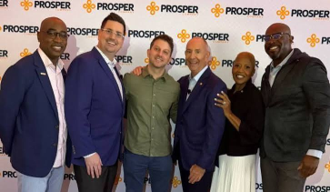 |
Listen to the principals and you can hear it. Arrowfly CEO Matt Logan put it plainly: "The people in that room are exactly who our partners in food, retail and hospitality want to build relationships with." And Prosper Co-Founder and CEO David Jobe framed what the deal unlocks for his team, the chance to "focus on purposeful growth, widening our impact and growing the talent pipeline." That's two leaders describing the same prize from opposite sides of the table: the people.
So the takeaway for the operators and investors reading. Watch where capital flows in media and events, b/c it tells you what the industry has decided is scarce. Right now it's flowing toward relationships and toward talent, the two things no one can manufacture overnight and no algorithm can fake. If you're building a business in this space, the lesson is the same whether you run a restaurant or a media company: own the room, and invest in the people in it.
A huge congratulations to Matt Logan and the Arrowfly team, and to David Jobe and everyone at Prosper. Two groups that genuinely care about this industry, now setting a bigger table together. We couldn't be happier for our friends, and we cannot wait to see what you build. Save us a seat. |
| |
|
THE B LIST
Know someone who should be on this list, or someone who'd want to see it? Forward this email or share it with your network!
|
| |
MY POINT OF VIEW by Julie Zucker 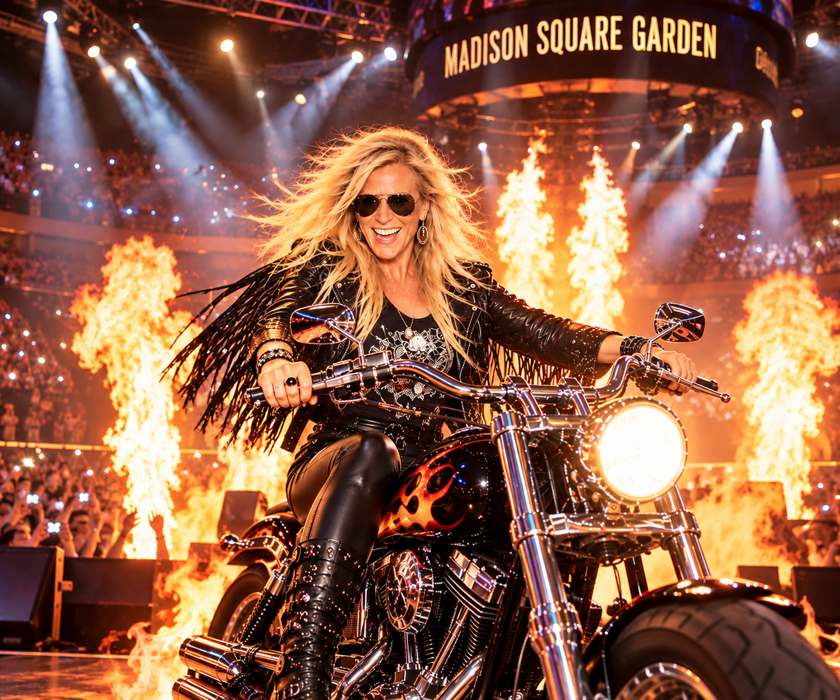 |
My first concert was Meat Loaf. My next concert will NOT be Harry Styles. Not because I don’t want to go. Not because my kids don’t want to go. But because when I saw tickets hovering around $700, I decided Harry and I could remain respectfully apart.
I’m all in on the experience economy right now. Get out of the house. See the concert. Take the trip. Eat the meal. Make the memory. But when did making memories get so ridiculously expensive? We’ve reached a point where Americans are flying to Disneyland Paris because it can be cheaper than going to Disney World. Yes, apparently “let’s just go to France” is now the budget option.
For those of us in hospitality, there’s an interesting question buried underneath my concert ticket shock rage. We’re in the business of creating experiences and making people feel welcome, but what happens when the price of admission means fewer and fewer people can actually be part of them? At what point does the experience economy become the exclusive economy?
So what does Meat Loaf have to do with Harry Styles, Disney and the price of a beer at a concert? I’d do anything to tell you...but I won’t do that. You’ll have to click to read. Read this week's POV |
| |
THE INSIDERS |
|
|
| |
|
|
| |
|
|
| |
|
That's it for today!
See you next week, same bat-time, same bat-channel.
It takes a village!
Jimmy Frischling
Branded Hospitality
[email protected]
235 Park Ave South, 4th Fl | New York, NY 10003
Branded Hospitality is a foodservice growth platform with three integrated business lines: Ventures, Solutions, and Media. We invest in innovative tech and emerging brands, provide expert advisory and capital strategies, and amplify visibility through podcasts, newsletters, social, and events, creating a powerful flywheel that drives growth, brand strength, and lasting success.
Looking to get in front of 400,000+ hospitality movers and shakers? Dive into our media kit and see how we can help amplify your brand.
HOSPITALITY HEADLINE
|
|