This website uses cookies

Read our Privacy policy and Terms of use for more information.

Hospitality Headline

TOP OF THE FOLD

Sponsored byRoku

Three Questions, One Clearinghouse

The Restaurant Finance & Development Conference kicks off Monday in Las Vegas. Events like this rarely command the lead in the H², but this year is different

by Jimmy Frischling

Three Questions, One Clearinghouse

Friends of Branded!

Happy Saturday and I hope you had a great week.

"Why is this night different from all other nights?"

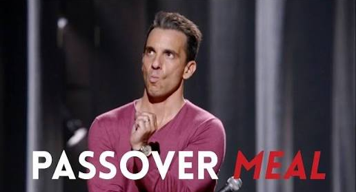
If you've ever sat at a Seder table, you know the line. It opens the Four Questions, traditionally asked by the youngest person at the table and as comedian Sebastian Maniscalco pointed out, is traditionally followed by a very long wait before anyone gets to eat (and Mr. Maniscalco made it clear he wasn’t happy about that).

It's the question that turns a dinner into a story, b/c the whole point of asking is that the answer matters.

Passover Meal | Sebastian Maniscalco: Aren't You Embarrassed

Top of the Fold

I know, it's November. Passover is months away, there's no brisket in the oven, and this week's Top of the Fold has nothing to do with matzo.

What it’s about is the question I've been asking myself all week as Team Branded prepares for Las Vegas: why is the Restaurant Finance & Development Conference (RFDC) different from all other conferences?

On Monday, November 9th, RFDC 2026 kicks off at the Wynn Las Vegas and Branded will be there in full force.

Conferences don't usually earn a place at the Top of the Fold. This one does, b/c this year’s event is more important than others. So, let's ask some questions.

Why is RFDC different from other conferences?

RFDC is considered the premier business and financial event for the restaurant industry. There are other conferences and trade shows that play an important role in our world, and they lean heavily into kitchen equipment, technology & innovation and what operators are looking for and care most about.

Good. We need those. And Team Branded shows up for those events with enthusiasm.

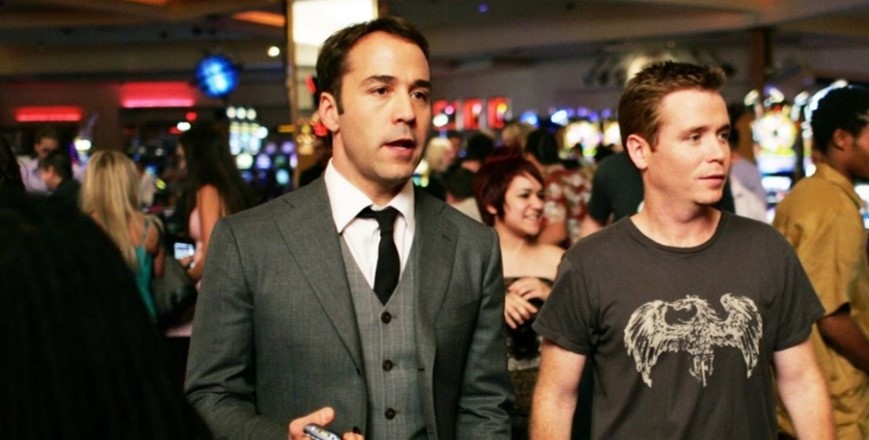
RFDC, however, takes a page out of George Costanza's playbook: it's in the business of doing business. (And unlike George, nobody in the room has to pretend to be an importer/exporter for Vandelay Industries.)

Top of the Fold

It's built for the business side of the restaurant business. Multi-unit operators and franchisors sit down directly with investment bankers, private equity firms, M&A specialists, lenders, and sale-leaseback experts to line up the financing for the next expansion or the next buyout. Restaurant Finance Monitor has been producing it for more than three decades, and it pulls roughly 4,000 owners, operators, CFOs, and senior executives into one building.

Nobody walks the floor at RFDC to kick the tires on a combi oven (although who doesn’t love the look and feel of a new combi oven). They come to kick the tires on a capital structure.

Why is this year's RFDC different from previous years?

It’s different b/c the restaurant and restaurant technology (ResTech) M&A market is entering a powerful period of momentum heading into 2027. After several years of stagnant deal flow, driven by high interest rates and compressed margins, the dam is breaking.

If you've been reading The Deal Room, you've watched the water rise in real time. Pizza Hut and Olo going private ("Low and Slow"). Uber and ezCater. DoorDash buying Grubhub's campus business. Cut+Dry acquiring Enterprise Café (full disclosure: Cut+Dry is a Branded portfolio company). And just last week, Trian's roughly $1.4 billion proposal to take Wendy's private.

Each one is a data point. Together, they're a trend line.

And the volume is being propelled by a distinct "barbell" dynamic.

The top tier. High-performing, hyper-efficient brands are aggressively pursuing fresh capital, or being targeted by private equity firms hungry for predictable yield.

The bottom tier. Brands dealing with operational distress or system instability are actively looking for turnaround sponsors, which is creating a surge in distressed asset acquisitions.

ResTech consolidation. On the technology side, platforms are consolidating to kill point-solution fatigue. Legacy enterprise systems are buying smaller, AI-native startups to quickly build out automated labor, inventory, and marketing stacks.

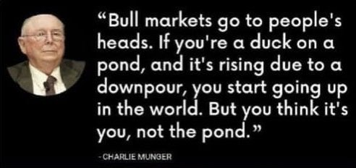
Notice what a barbell doesn't have: a middle. Regular readers know exactly how I feel about the middle of the road. It's where small operators go to die, and apparently, it's where deal flow goes to die, too. (And as a middle child, I feel like channeling my inner Jan Brady as a result of all this middle-bashing).

Top of the Fold

Why does that explode the importance of RFDC 2026?

B/c with this much deal momentum, RFDC shifts from a standard corporate retreat into an urgent, high-stakes tactical forum. That’s right, this year is different and I’ll tell you why.

First, we’re seeing a pivot in valuation strategy. At previous conferences, growth and unit expansion got top billing. This year the conversation is about margin resilience, financial discipline, and confidence. Buyers are willing to take calculated risks for returns in the 15–20% range, but they want ironclad operational proof before they write the check.

Put simply: Growth gets the meeting, but margin gets the check.

Second, the capital is there, but it’s hard to access. Public IPO markets remain highly constrained and tightly regulated for restaurant brands, which leaves private capital as the primary engine for liquidity. If private capital is the only well in town, RFDC is where everyone shows up with a bucket. It’s the physical clearinghouse for that capital, three days, one address.

Third, tech due diligence takes center stage. For tech investors and strategic buyers, this is no longer about scrolling through a feature list. It's about evaluating the architecture underneath, to make sure the platform isn't carrying structural technical debt that makes it un-buyable in the consolidation wave.

Put simply (again): Features get the demo, but architecture gets the deal.

This isn't Passover, and the list of questions ends here at three. (Dayenu)

Top of the Fold

So, what does all this mean if you run a restaurant company, whether or not you're boarding a flight to Vegas this weekend?

It means the bar moved (but don’t hate the players, hate the game). If you're on the top end of the barbell, the capital is out there, but it's going to ask you to prove your margins hold up when the cost of beef, labor, and rent all move against you in the same quarter. If you're on the bottom end, the turnaround sponsors are out there too, and the sooner you're honest with yourself about which end you're on, the better the terms. And if you're a ResTech company, the question isn't whether your product demos well. It's whether a buyer's engineers will want to inherit your stack.

Here's the audit I'd run before Monday, in Vegas or at your desk.

Can you show a buyer or lender your margin resilience in three numbers, not thirty slides? Is your capital structure built to survive a bad year, or only to celebrate a good one? And if you're in tech, would your architecture survive a week of diligence by someone who's paid to find the problems?

For many of the people walking into the Wynn on Monday, the stakes are high and the competition for capital is fierce. And contrary to the slogan, what happens in Vegas won't stay in Vegas. The deals started, the terms set, and the relationships built over these three days will carry straight into 2027 and set the stage for the year.

If you're going to be there, come find us. If you're not, don't worry, we'll bring back what we hear.

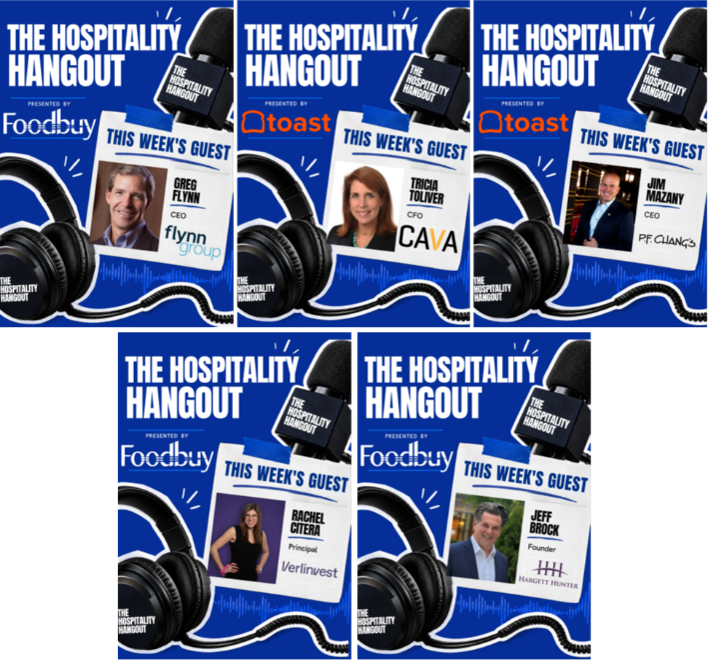
And away from the various capital and financial activities Branded has going at RFDC, we’re not capable of just attending these industry events, so please come see us in the marketplace as we bring the Hospitality Hangout podcast to Vegas, in partnership with our friends from Foodbuy and Toast.

Why walk when you can run!

The Hospitality Hangout

It takes a village!

Top of the Fold
 

Your next regular is on Roku

Roku Ads Manager: Reach your next customer with streaming TV ads

Empty tables cost you revenue you can't get back. Casual diners are already streaming on Roku, and self-serve CTV ads from Roku Ads Manager help you reach them in every market, down to the ZIP code. The result: more diners tonight and more repeat customers over time.

Sign up today

YOUR WEEKEND LISTEN

The Hospitality Hangout

The Hospitality Hangout: Adam Modzel of Bagel Brands

Einstein Bros. and Bruegger’s? Same family. One keeps it classic New York, the other “plays with its food.” Bagel Brands COO Adam Modzel tells us how he keeps four chains from getting their schmear mixed up.

SpotifyApple PodcastsYouTube MusicAmazon Music
 

THE DEAL ROOM

A Cover Is Not the Book

Here are two numbers from the venture world that tell the whole story of capital right now.

So far this year, at least 114 Series A rounds of $100mm or more have closed globally, and more than 70% of them went to AI companies. I’m going to repeat that last part for emphasis: 70% of them went to AI companies.

Meanwhile, the number of U.S. Series A rounds in Q3 fell to 272, down from 377 a year earlier. That's roughly 28% fewer deals in a market that, judging by the headlines, has never been hotter.

The deal room

Those figures come from a sharp piece in Crunchbase News by Marc Schröder of MGV, and he nails it in one line: "The megarounds hide how few A rounds are getting done." (And in the spirit of attribution, the image above is from one of my daughter’s favorite movies, Mary Poppins Returns).

But wait, it gets starker.

Only 16% of the companies that raised a seed round of $1mm or more in 2024 have made it past seed. For companies through 2020, that number was 55% or higher. The checks are bigger. There are just far fewer of them, and the bar to get one keeps rising.

If that sounds familiar, it should, b/c it's the exact barbell I laid out in this morning's Top of the Fold.

And it isn't just a venture story. Look at our industry this fall and you'll see the same picture: giant headlines at the top, and a much harder market underneath.

Let’s start at the top of the barbell. In August, Owner, the "AI-native" restaurant tech platform, raised a $240mm Series D at a $2.3 billion valuation, led by Goldman Sachs, with annual recurring revenue north of $100mm. Back in March, Sysco agreed to buy Restaurant Depot for $29.1 billion. Those are big, confident checks, and they make it look like the money is flowing for everybody.

It isn't. For proof, let’s look at two deals that didn't happen.

Papa John's: the money was there, and the price was the problem. Over the past 18 months, Papa John's ran a strategic review that drew real interest. Apollo walked away from a roughly $2.1 billion take-private bid. Then Irth Capital, already holding about 10% of the company, bid $47 a share, about a 44% premium at the time.

The headline looks good, but let’s look at the fine print (aka: the financing terms), b/c that's where the real story is. Per PitchBook, Irth's bid was backed by $725mm of preferred equity from Brookfield at a 12% all-in yield (10% paid in kind, 2% in cash) with a minimum 1.6x return on invested capital, plus roughly $1 billion of bridge debt from Morgan Stanley headed for a whole-business securitization.

I know that’s a lot of math for a Saturday morning, but it’s too important to ignore.

12% on $725mm is about $87mm a year, most of it accruing rather than paid in cash. For context, Papa John's guided to $180mm to $190mm of adjusted EBITDA for the entire year, and that's before you service a billion dollars of debt. That isn't cheap money. That's a toll road.

On August 6, the board walked away and bet on its own turnaround plan instead. The same day it suspended the dividend, cut guidance, and reported North America comps down 8.3%. The board says it "remains open to other alternatives," and I'd expect to hear that phrase in a few hallway conversations at the Wynn next week.

MTY and Foodtastic: the money never quite showed up. This week, MTY Food Group's board unanimously rejected Foodtastic's proposals at $43 a share (about $982mm, per The Canadian Press) and ended talks. The detail that jumped out at me: MTY says it granted Foodtastic several exclusivity extensions so it could line up its financing, and the deal still didn't come together. MTY wrapped a nearly year-long strategic review, chose to "accelerate" its existing plan, and announced a CEO transition the same day.

Two very different companies, one lesson. A willing buyer and a willing seller are no longer enough. The capital has to show up, at a price the business can actually carry.

So, here's the pattern. In venture and in restaurants, the headline numbers are being driven by a small number of winners: the AI platform with $100mm in recurring revenue, the strategic buyer with a fortress balance sheet. Everyone else is meeting a capital market that's open, but selective, expensive, and slow. Bigger checks, fewer of them, and a higher bar to get one.

And Mr. Schröder's advice to seed founders works just as well for a multi-unit operator or a ResTech CEO walking into RFDC on Monday. "The Series A bar is now a revenue bar." In our world, the bar is margin. Size the raise to the milestone you can prove, not the valuation you'd like, and if the only capital on offer comes with a 12% coupon and paid-in-kind interest, be honest about whether your P&L can carry it.

The takeaway: A big headline is not a hot market. Don't confuse a mega-round with a money supply.

The deal room
 

THE SHOUT OUT, POWERED BY ORACLE

Vandelay Industries, Back of House Division

Remember George Costanza and Vandelay Industries from this morning's Top of the Fold? Well, it turns out Branded is in the import/export business after all.

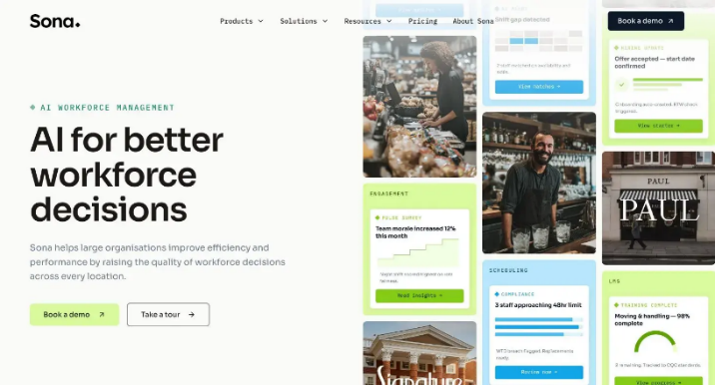
Full disclosure, and a proud one: Sona is Branded's newest partner company. It was born in London, and we're proud to be part of its expansion in the U.S.

The shout out

Here's a belief Branded is putting real chips behind (Vegas pun intended): the first place AI will earn its keep in our industry isn't the host stand or out on the floor facing guests. It's the schedule.

The schedule, the labor model, the payroll, the forty texts it takes to cover a Saturday double. That's where the hours go, and that's where the margin hides. For any operator, labor is one of the two biggest lines on the P&L. Move it by a point or two and you've changed the year.

Think about how that Saturday actually goes today. A GM covering a call-out is texting six people, checking a spreadsheet for overtime, and guessing at demand from last year's number, usually across a handful of tools that don't talk to each other.

The promise of an AI-native platform like Sona (an end-to-end workforce management system built for frontline industries like hospitality, retail, and healthcare) is that the forecast, the schedule, the compliance check, and the cover request all happen in the background, and the manager approves instead of assembles. Its AI assistant, Raffy, flags what's changing and suggests the fix. Its builder tool, Forge, lets an ops team create a simple internal app by describing it in plain English. Ben Dixon, Sona's CTO and co-founder, has described the ideal as a "really, really good chief of staff."

That's why I'd argue the shift is structural, not cosmetic. Legacy workforce tools are systems of record: a calendar waiting for someone to type into it. An agentic platform is working in the background, all the time. In this morning's Top of the Fold, I wrote that features get the demo, but architecture gets the deal. This is what I meant.

Sona

Now, the fair pushback, b/c I'd make it myself if I were running your P&L. You already have a scheduling tool. It works fine. Switching means migrating data, retraining managers, and a few rough weeks while everyone learns the new thing. All true. But "works fine" is doing a lot of work in that sentence. A tool that records what your managers decided doesn't make their next decision any better, and on one of the two biggest lines on the P&L, that gap is the whole ballgame.

And here's the caveat, straight from Sona's own CTO: "AI is only as good as the data it runs on." If your POS data is a mess, no AI is going to schedule your way out of it. Clean up the data first.

On results, Sona's own numbers claim a 1–2% labor cost reduction in the first month and a 4% reduction across Popeyes' U.K. locations. Those are vendor figures, and you should treat any vendor's figures (including our partner's) as a starting point for diligence, not a conclusion.

One nod to this morning's Deal Room: in a year when U.S. Series A rounds fell roughly 28%, Sona closed a $45mm Series B in April. In this market, that bar gets cleared by products that can point to the P&L line they move. As CEO Steffen Wulff Petersen put it, "We had a ten-year plan. AI made it a one-year plan."

So here's the takeaway, whether or not you ever take a meeting with Sona.

Three questions to ask any workforce platform pitching you at RFDC: Can it show the labor line it moved, at a customer that looks like you? Does it act on its own, or just display data for someone else to act on? And will your managers actually open the app?

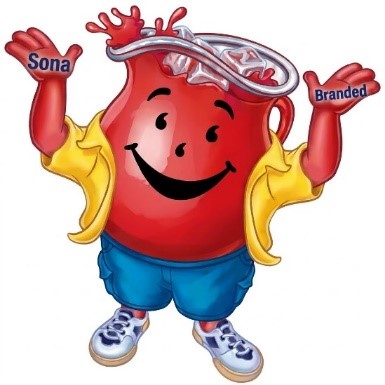
Am I drinking the Sona Kool-Aid? Yes, yes I am! (Which is exactly why I want you asking those three questions.)

The Sona team will be with us out at RFDC. Do you want to connect, kick the tires, and tell me where I'm wrong? Do the Carly Rae Jepsen thing and Call Me Maybe. We’ll make it happen.

Call Me Maybe
 

Big buying power. Bigger cost savings.

Foodbuy Foodservice

Foodbuy Foodservice helps operators reduce costs, improve efficiencies, and simplify procurement with strategic sourcing solutions. Contact our sales representative HERE for additional information on how Foodbuy Foodservice can support your operation.

Become a Member


WHAT WE'RE READING THIS WEEK

🚗 Which Companies Make the Best Cars? Here Are the 10 Top-Rated Brands, According to Our Testing – Car and Driver

📱 Apple's Latest Siri Announcement Could Mean the End of Apps on Your iPhone – Inc.

⛳ 10 million views, 82 cameras, and $4 million: Inside the 'f***ing awesome' Internet Invitational – Golf.com

☕ We Tried 17 Nespresso Pods — Our No. 1 Pick Is So Good We'd Drink It Black – Food & Wine

🧤 A Tale Of Two Golf Gloves – Forbes


THE B LIST

10 names to know this week

Know someone who should be on this list, or someone who'd want to see it? Forward this email or share it with your network!


MY POINT OF VIEW

The Customer Is Always Right (Right?)

by Julie Zucker

The Customer Is Always Right (Right?)

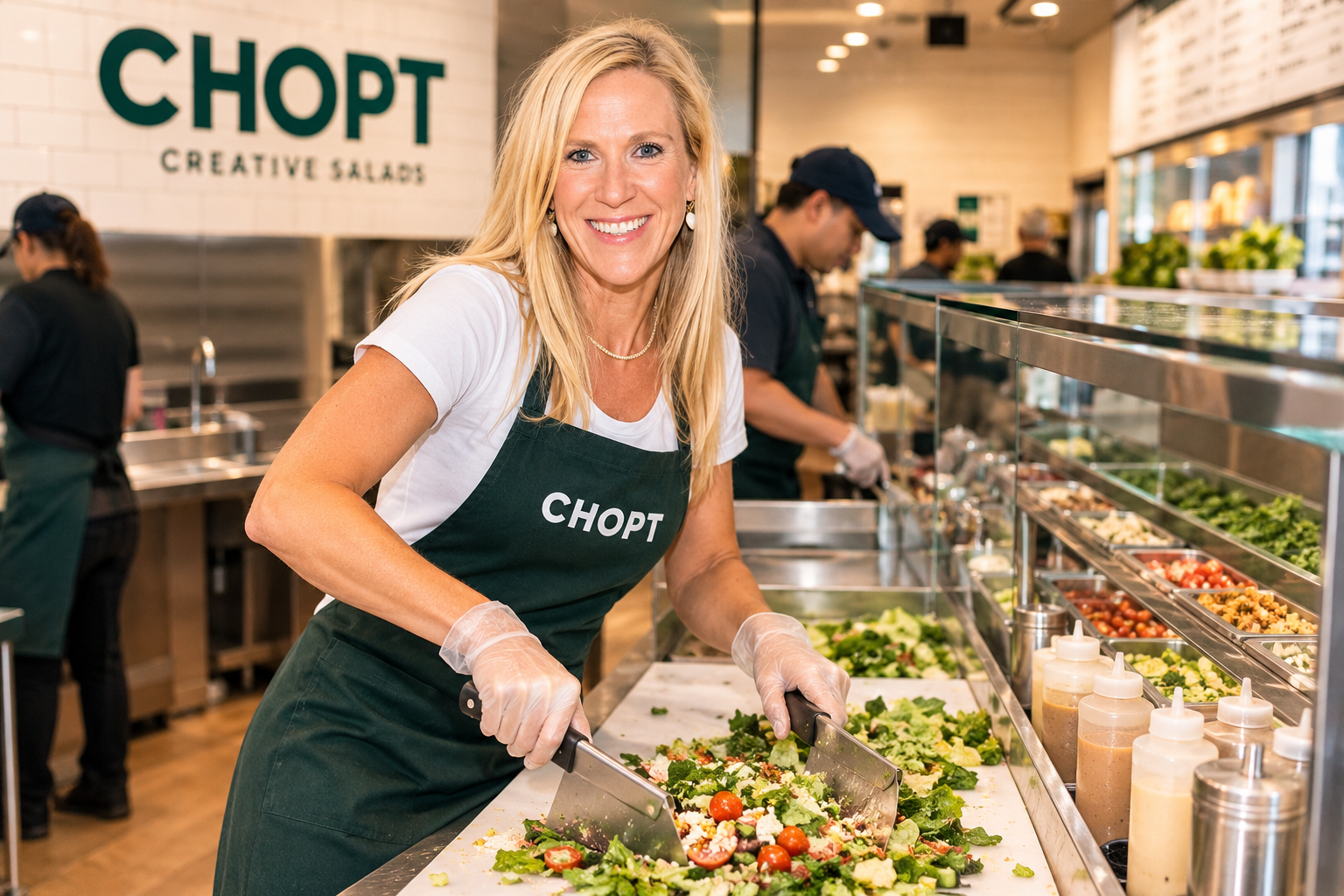
Did you know I was one of the first Chop’t customers? My first job out of college was right above its original NYC location. As a recent grad on a budget, I figured out how to turn a $6.95 salad into two lunches. (Yes, I brought my own turkey in a Ziploc. Those were lean times. Literally and figuratively.)

When I changed jobs, the closest Chop’t was three subway stops away. So I convinced the Union Square location to deliver to my new office if I guaranteed 10 orders. Deal accepted! And just like that, half my office became regulars. (I was basically an influencer before influencing was a thing!)

But here's the real hospitality story. Someone at Chop’t said YES. They listened, thought outside the box, and turned one loyal customer into an office full of them.

Twenty years later, we're obsessed with AI, automation, and customer acquisition. (Hand raised, I'm guilty too.) But sometimes the best hospitality doesn't require technology.... just someone willing to listen. Is the customer always right? Absolutely not. But can one simple yes create 20 years of loyalty? I've got a story for you.

Read this week's POV


THE INSIDERS

Multisensory Dining: Your Guests Taste It Before They Order It

Multisensory Dining: Your Guests Taste It Before They Order It

Menu words, food photos, and the sizzle across the room light up the brain’s taste and smell centers before the first bite.

By Melissa Hughes · Read the full piece

 
What Gets a Guest to 10 Visits? Here’s How to Find Out.

What Gets a Guest to 10 Visits? Here’s How to Find Out.

Guests who tried our Cauliflower Bites were far more likely to become high-frequency guests.

By Rev Ciancio · Read the full piece


That's it for today!
See you next week, same bat-time, same bat-channel.
It takes a village!

Jimmy Frischling
Branded Hospitality
[email protected]

235 Park Ave South, 4th Fl | New York, NY 10003

Branded Hospitality is a foodservice growth platform with three integrated business lines: Ventures, Solutions, and Media. We invest in innovative tech and emerging brands, provide expert advisory and capital strategies, and amplify visibility through podcasts, newsletters, social, and events, creating a powerful flywheel that drives growth, brand strength, and lasting success.

Looking to get in front of 400,000+ hospitality movers and shakers? Dive into our media kit and see how we can help amplify your brand.

HOSPITALITY HEADLINE