


|
||||||||||
|
Top of the fold
A Ghost by Any Other Name
The model didn't die. It just needed a new name (and a new business plan).
— by Jimmy Frischling
|
||||||||||

Friends of Branded! Happy Saturday and I hope you had a great week. Let me start with a quick vocabulary lesson, b/c some of the best marketing in history is really just a rename. "Sweetbreads" sound like something warm from the oven; they're actually the thymus or pancreas of a calf. "Rocky Mountain oysters" sound briny and coastal; they are, in fact, bull testicles, peeled, flattened, and deep-fried, with no relationship to the sea whatsoever. And at the risk of getting the stink-eye from any number of people, "geriatric pregnancy," the phrase that made every expectant mother over the age of 35 feel roughly a hundred years old, has been gently rebranded by the medical world as "advanced maternal age." Same thing. Better name. Goes down easier. 
No, this week's Top of the Fold isn't a food-etymology column (and there will be no additional comments made about pregnancy). It's about a corner of our industry that just got the sweetbreads treatment, and badly needed it: the ghost kitchen. Let's take a walk down memory lane b/c everyone in our industry remembers the ghost kitchens craze, right? Five years ago ghost kitchens were the future of food, full stop. Delivery-only, no dining room, no prime real estate, no front-of-house payroll. Venture capital poured in. Travis Kalanick's CloudKitchens hit a reported $15 billion valuation, Kitchen United was opening commissary warehouses as fast as it could sign leases, Reef Technology (via Reef Kitchens) found a new use for shipping containers and modular trailers in parking garages, and every deck in hospitality had a slide about going "asset-light." Then the model, at least the original version of it, largely collapsed. In the spirit of learning from history, so that we at least have a chance not to repeat it, I believe it's worth being honest about why the ghost kitchen market collapsed, b/c the reasons are a master class in bad unit economics. We need to start with the math (just a little bit), which never actually worked. The whole pitch was low overhead. But a delivery-only kitchen lives or dies on third-party apps, and DoorDash and Uber Eats take 15% to 30% of every order. Restaurants survive on 3% to 10% margins in the best of times. Put a 30% tax on the platform and you are losing money on nearly every meal you cook, at any volume. The "savings" were an illusion. The ghost kitchen was often just a machine for cooking food at a loss, faster. Reminds me of a Saturday Night Live skit: First CityWide Change Bank (SNL) 
Then there was the invisible-brand problem. A brick-and-mortar restaurant markets itself for free every time someone drives past the sign. A ghost kitchen has no sign, no foot traffic, no location. So, to be seen at all, it had to buy ads and pay for premium placement on the very apps already taking a third of the check. And when the platforms and search engines started cleaning up fake, duplicate, and cloned virtual listings, the traffic these "brands" had been renting vanished overnight. Add the pandemic hangover. The sector was capitalized on the belief that lockdowns had permanently changed how America eats. They hadn't. When diners rushed back to actual restaurants, the volume needed to fill those dense commissary warehouses evaporated, and occupancy at a lot of shared kitchens fell roughly 50%. A half-empty warehouse is not asset-light. It's just empty (just saying). And finally, the identity crisis. When one exhausted line cook is producing food for a dozen different "brands" that exist only as logos on an app, quality goes exactly where you'd expect. Cold, soggy, and wrong. Staff turned over, orders got mangled, and trust cratered. It got ugly and public: MrBeast's very online war with Virtual Dining Concepts over the quality of his own burger became a cautionary tale, and Uber Eats eventually purged more than 8,000 virtual storefronts to clean up the mess. When the delivery app has to delete you to protect its own customers, the concept has a problem. 
So, the ghost kitchen died. Except here's the thing: it didn't. The demand underneath it, off-premise and delivery, never stopped growing. What died was a specific, broken business model and a name that now reeks of it. And the smart operators have quietly rebuilt the whole thing. Watch how the grown-ups are doing it. The reinvention isn't invisible delivery-only brands, its real brands using this infrastructure as a channel. Pressed Juicery opened 27 CloudKitchens locations (I see you Mr. Kalanick), not to replace its stores but to feed a CPG business that's grown sevenfold in two years, where a single kitchen can throw off $250,000 in incremental sales without the roughly $1 million it takes to build a store. Chick-fil-A dropped a CloudKitchens location into Miami's Wynwood to serve a high-delivery neighborhood, framing it, tellingly, as "less about following a trend and more about listening to our customers." Same warehouses, same Kalanick company, even. Completely different, and actually sane, business. Full disclosure on my favorite version of this, b/c they're one of ours: Craveworthy Brands, a Branded portfolio company, led by our friend and partner, Gregg Majewski, just took its wing concept Wing It On! and put it inside all 20 of its Fresh Brothers pizzerias across Southern California, expanding the wing brand by 20 locations in a single launch, no new leases required. That's the multi-brand ghost-kitchen dream finally done right. Not a dozen fake logos out of an anonymous commissary, but a second real, award-winning brand cooking out of an existing real kitchen, with real staff and real customers who already trust the room. The identity crisis, solved by simply having an identity. 
So here's the takeaway for those of us who build and back these businesses. Don't confuse a broken model with a dead trend. Off-premise was always real. The ghost kitchen (the invisible, app-dependent, quality-optional version) was just the wrong vehicle for it. The winners treat delivery as a channel bolted onto a genuine brand with genuine economics, they own their customers, and they never rent their existence from an algorithm (come on Dr. Hughes, that's gold right there!). 😊 Which means the model deserves a name that isn't a tombstone. "Ghost kitchen" is this decade's "geriatric pregnancy." I'm Branded's "Finance Guy" and I'm fully aware that there's a plethora of smarter, more creative and better marketers than I'll ever be, but I'll kick off the re-branding campaign with a few suggestions. Let's call it a "production kitchen," a "hybrid kitchen," an "off-premise channel." At the end of the day, call it whatever you like, but retire the ghost. The thing works again. It just needed the sweetbreads treatment. Old is new again. Same idea, better name, much better business. It takes a village! 
|
||||||||||
Your weekend listen
|
||||||||||
|
Your door to more profitable growth

We're here to help you navigate the endless complexities of running a business.
Contact DoorDash for Merchants Sales
|
||||||||||
|
Pass the Mic
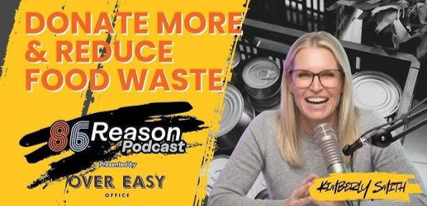
In restaurant speak, to "86" something is to kill it, cross it off, we're out. So naming your podcast the 86 Reason Podcast is a wink, and I'm here for it. This week's Shoutout goes to its host, Xavier Mariezcurrena, a friend of Branded, and to the show he's building. Xavier runs the mic over at Over Easy Office, the back-office firm that handles the deeply unglamorous, absolutely essential work of keeping restaurants solvent: AP processing, bookkeeping, inventory, the whole Restaurant365 grind. If you've read me on the back of house lately, you know I think that's exactly where restaurants are won or lost. So it tracks that the folks handling the numbers also tell great stories about the people behind them. The 86 Reason Podcast is Xavier doing precisely that, and doing it well. Now, the episode I actually want to point you to, b/c it lets me do something I don't get to do often enough. Xavier sat down with Kimberly Smith, the CEO of Copia. Full disclosure, and I'll give it to you straight: Copia is a Branded portfolio company, and honestly one of the ones closest to my heart. Which is exactly why I'd rather you hear about it from Kimberly than from me. So I'm doing my best impersonation of John Stockton (the NBA's all-time assist leader) and passing the mic. Listen to Kimberly explain, in her own words, why America doesn't have a food scarcity problem so much as a logistics one, and how Copia turns the surplus a kitchen would otherwise pay a hauler to destroy into meals for its community and a real return on the P&L. It lands better than anything I could write, b/c it isn't a pitch. It's the CEO, on someone else's show, talking about the work. That's the whole point of this Shoutout, really. Two people I admire, doing the thing: Xavier building a platform that gives our industry's builders a voice, and Kimberly building something that quite literally feeds people. Go give the episode a listen, and while you're there, subscribe to the 86 Reason Podcast. The good ones deserve the download. 86 Reason Ep22 | Kimberly Smith from Copia - Donate More and Reduce Food Waste If you would like to connect with Branded Hospitality to discuss opportunities with Copia, please click here. 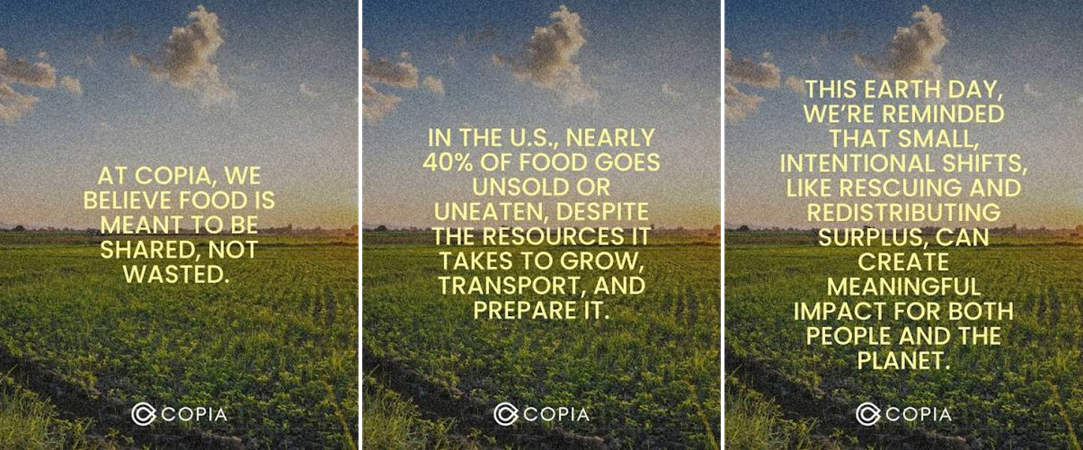
|
||||||||||
|
NetSuite Meets AI: Practical Lessons and Strategies

AI is reshaping financial operations in NetSuite, delivering practical gains for finance teams and IT leaders. This guide, authored by industry expert Tim Dietrich, explores actionable strategies for adopting AI responsibly, from prompt-driven financial analysis to purpose-built AI agents and proven governance frameworks.
Get Your Guide
|
||||||||||
|
What we're reading this week
|
||||||||||
|
Come for the AI. Stay for the Real Results.

AI is everywhere in restaurant marketing. But how is it actually being used to create more personalized guest experiences and drive results? Join our Hospitality Insiders live panel to hear real operators break down what's working, what's hype, and how to put AI to work in your own restaurant.
Click here to register
|
||||||||||
|
Who Owns the Operator?
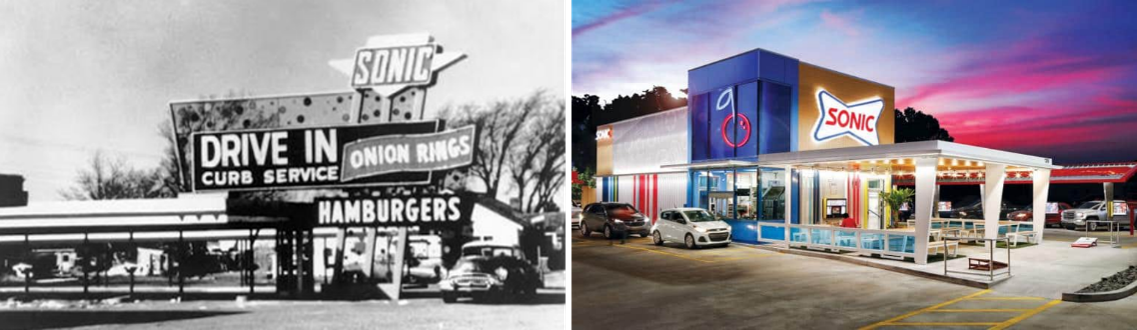
Quick, name the largest restaurant company you've probably never heard of. Here's a strong candidate: KBP Brands. More than 1,100 restaurants across 32 states, roughly $1.5 billion in annual sales, operating KFC, Taco Bell, Arby's and Sonic.
Earlier this year KBP scooped up another 78 Sonics to become the fourth-largest Sonic operator on the planet. You have almost certainly eaten at a KBP restaurant. You have almost certainly never seen the name on a sign. That's the whole point, and it's the pattern I want you to sit with. The most important consolidation in our industry isn't happening at the brand level, where all the headlines live. It's happening one level down, at the operator level, and it's happening quietly. The franchisee has become an institution. The first half of 2026 was thick with franchisee roll-ups, and the smart capital has figured out why: a great multi-unit operator, with predictable, contractually-defined unit economics and a proven playbook, is often a better asset than the volatile brand sitting on top of it. Private equity used to want the franchisor. Increasingly, it wants the franchisee. Whoever owns the operator owns the P&L. But here's the rub, and it's the part that matters most to me. A lot of the capital chasing great operators shows up with strings attached: a majority sale, a control premium, a new boss in the corner office. A phenomenal franchisee with 25 strong units and the hunger to build 100 often can't find money that lets them grow without handing over the keys to the thing they built. Which is exactly why we went and did something about it. Full disclosure, and this one's personal. Branded, together with ZJD, the investment group led by Zack Fishman, and our friends (and now partners) at Fishman PR, launched F&B Capital, a capital-markets firm built specifically for the franchise community. Growth equity. Structured credit. Minority recaps. M&A advisory. For franchisors and franchisees who need thoughtful access to capital or a strategic partner, but don't want or need to sell control. As Zack put it, "there are many strong franchisors and franchisees that do not need or want a majority sale, but still require thoughtful access to capital." That gap is the entire reason F&B Capital exists. Regular readers know Branded as an operator-centric tech investor, backing the software that actually helps restaurants run: the back-of-house tools, the guest platforms, the plumbing. F&B Capital is the other half of the very same belief. Back the operators, too. Not just the technology they run on, but the people running it. The KBPs of the world prove the model works at 1,100 units and $1.5 billion. Our bet is on the operator with the same drive and a fraction of the scale, the one who needs a capital partner that actually understands the difference between owning a brand and running one. The brands get the headlines. The operators build the business. The smart money is finally learning to tell them apart. If you're interested in exploring areas of collaboration with F&B Capital, Branded's portfolio companies or our deal flow and opportunities to engage with our Branded Capital team, please click here or contact me directly. 
| ||||||||||
|
The b list
10 names to know this week
Know someone who should be on this list, or someone who'd want to see it? Forward this email or share it with your network!
|
||||||||||
|
My point of view
by Julie Zucker
|
||||||||||
|
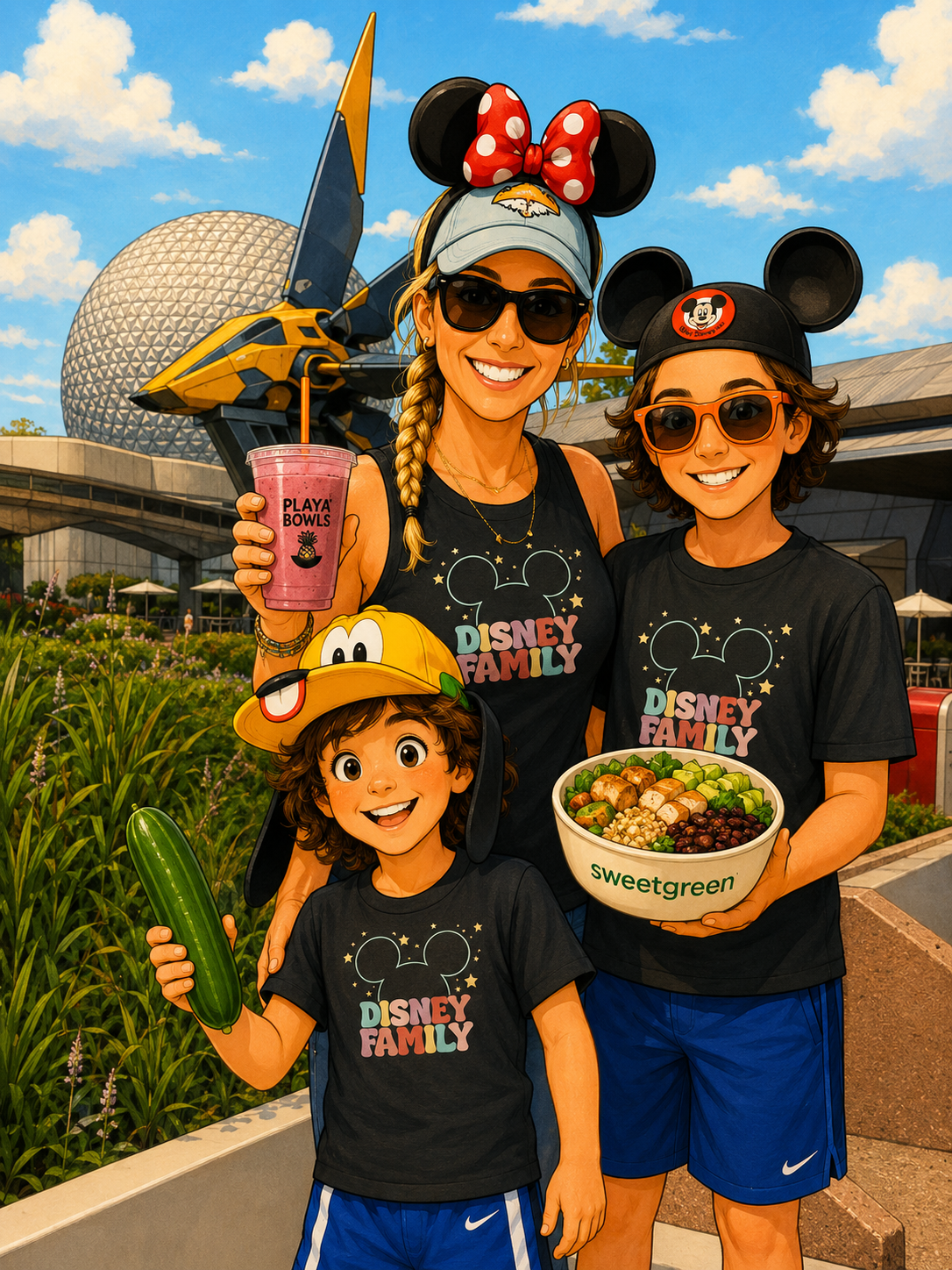
What does a $3 pickle have to do with the future of hospitality?!?! You didn't ask, but after 3 days, 20,000+ steps a day and A LOT of chicken fingers and french fries at the happiest place on earth…I'm going to tell you. Disney may be the gold standard for hospitality. The people, the training, the attention to detail, the way every part of the guest experience has been thought through. But as consumer eating habits are changing (GLP-1s, protein, fiber, smaller portions, better-for-you fast food), I couldn't stop wondering…has the FOOD kept up with the guest? Because this isn't really a story about me wanting a salad (although, I REALLY wanted a salad). It's about what happens when consumer expectations change faster than the experience we've built around them. And how even the very BEST hospitality brands have to keep paying attention. So yes, I came home from Disney with magical memories, sore feet, and apparently a newfound appreciation for the $3 pickle. 🥒 |
||||||||||
|
The insiders
|
||||||||||
|
||||||||||
|
||||||||||
|
||||||||||
|
||||||||||




See you next week, same bat-time, same bat-channel.
It takes a village!
Jimmy Frischling
Branded Hospitality
[email protected]
