This website uses cookies

Read our Privacy policy and Terms of use for more information.

Hospitality Headline

TOP OF THE FOLD

Sponsored byRoku

Commander in Chief

by Jimmy Frischling

Commander in Chief

Friends of Branded!

Happy Saturday and I hope you had a great week.

Before we dive in, a personal story, and the one behind my first selfie.

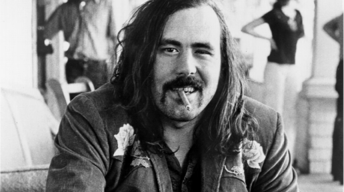
George Frayne, the artist behind Commander Cody, was a Long Island legend and a favorite artist of two good friends of mine. Let’s call them Moo and Andy Mo. The Commander played My Father’s Place in Roslyn, NY twice a year, and between sets he’d hang out at the bar.

That’s where Moo and Andy Mo asked if they could buy him a drink. The Commander told them he doesn’t drink with “assholes.” As their heads dropped, he shouted to the bartender to line up shots for “him and his boys.” Moo and Andy Mo proudly shared that story with their “boys” up at camp that for one night, they were Commander Cody’s “boys.”

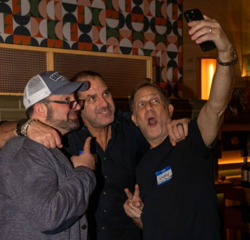
Twenty-plus years later, I caught the Commander at a joint in New York City and found him at the bar after a set. I asked for a selfie b/c I wanted to share the photo with Moo & Andy Mo. I was a BlackBerry guy back then (probably the last one standing), and the camera wasn’t great. The Commander happily obliged, and it was the first selfie I ever took.

While I was a slow adopter when it came to taking selfies, the selfie was the spark that ignited the influencer economy. It moved advertising from polished corporate campaigns to raw, relatable and highly profitable personal brands.

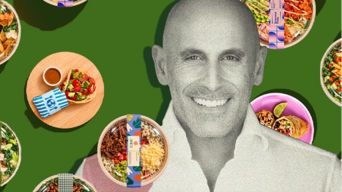
This week, Wonder unveiled Wonder Create, an AI-powered restaurant builder that lets people build their own virtual restaurants, with meals that can be ordered on Wonder (and on Grubhub and Seamless).

Wonder Create

On Wednesday night this week, Branded hosted an event with our friends, and now partners, at LOST iN, the travel media company, and we made our own announcement about a media partnership.

Yes, Wonder's announcement was just a little bit bigger than Branded's (and I'm still waiting for Inc. to call and feature ours the way they featured Marc Lore's 😊), but there's a thread that runs through both, and it's the move from the influencer economy to the creator economy that got my attention and inspired this week’s Top of the Fold.

LOST iN and Wonder Create reveal a powerful strategic convergence. One sells travel media. The other runs automated kitchens. But both are decoupling production from distribution to monetize creators, b/c both know pay-per-post ad revenue is a low-margin trap. Instead, they give creators the infrastructure to turn a brand into a business asset.

Wonder Create lets a creator turn their digital aesthetic or voice into a physical food brand. The creator doesn't need to learn how to source ingredients or run a kitchen. Wonder handles sourcing, cooking and delivery (with its automated Infinite Makeline doing the assembly), while the creator owns the concept and the brand and earns a revenue share on every order.

LOST iN does the same thing with travel. Instead of treating travel creators like temporary billboards for flight sponsorships, LOST iN rolls them into an ecosystem where their local curation is packaged into guidebooks, memberships, live events and licensed media assets.

LOST iN raises $4M, plans travel media M&A rollup

Both platforms are running an "Infrastructure-as-a-Service" model, serving as a backend operating system that removes traditional real-world barriers to entry.

Marc Lore has described Wonder Create as a Shopify-style front end with an AI prompt. For as little as $10 a month per location, a creator can put a restaurant concept on Wonder's automated network without owning a single piece of real estate or a single stove.

Jon Skogmo, the CEO at LOST iN, has positioned the company to act as the Shopify for hyper-local experiences. By acquiring and bundling distribution assets, it gives local chefs, independent creators and artists a turnkey engine to monetize their local footprint through premium media and live events.

There's a shared ideological bet here: consumers are tired of generic, hyper-polished social media influencers.

LOST iN's core thesis is a direct rebellion against the "sameness" of the algorithmic travel feed. They view authentic, real-world community and curated local knowledge as the ultimate luxury in an AI-commoditized media landscape.

Wonder Create gets there by design. Yes, it launched with a roster of well-known Founding Creators for day-one buzz, including Jim Gaffigan, Andy Cohen, Ally Love, Chef Marc Murphy, Livvy Dunne and Gary Vaynerchuk. But the real architecture is built for the niche operator.

And here's a (far less notable) connection between the two companies. Wonder acquired Mighty Quinn's BBQ, a Branded portfolio company, in an all-stock deal this summer, and Branded is now partnering with the good people at LOST iN. So Branded finds itself wonderfully tied to the creator economy thanks to these two tech-forward companies.

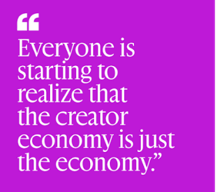
Quote graphic: the creator economy is just the economy

But this isn’t about Branded (okay, maybe a little). It’s about the bigger shift: the creator economy is moving from an audience-monetization layer to an IP asset class. Here’s what that looks like.

We're witnessing the death of the "Billboard Model." Historically, brands treated creators like TV commercials: pay a flat fee to hold up a product and talk to their audience. LOST iN and Wonder Create point to a future that belongs to creator-owned, platform-built physical and experiential assets. Creators will stop renting out their audience to third-party brands and start using automated backends to make their own products, menus and media channels.

We're witnessing the decoupling of execution from ideation. The traditional barriers to starting a capital-intensive business, like leasing a commercial kitchen or building a production studio, are being abstracted away. Wonder Create separates running the restaurant from building the culinary brand. LOST iN separates travel journalism and experience curation from legacy print distribution. Operational complexity gets outsourced to automated networks, and creators focus on taste, community, trust and curation. Lore said it well this week: "creativity, not capital should determine who gets to own a restaurant."

We're witnessing the industrialization of hyper-local. For years, venture capital prioritized mass scale: influencers with millions of generic followers. This new infrastructure makes micro-communities lucrative b/c the cost of spinning up a virtual brand or a curated local experience drops to near zero. A creator with 5,000 dedicated followers (a regional running club, a neighborhood coffee obsessive) can profitably launch a tailored menu or a ticketed event. Mass distribution is giving way to deep community monetization.

We're witnessing the creator as a corporate moat. In an era saturated with generative AI content, genuine human community and cultural trust may be the last defensible moats. Anyone can use AI to generate a recipe or a travel itinerary in seconds. But consumers will pay a premium for a menu curated by someone they follow, or a dinner designed by an independent local chef they trust. Tech companies will build the operating systems, but they'll rely on creators to supply the human trust that drives customer acquisition.

But before we all embrace the creator economy, let’s slow our roll. I’m enthusiastic about all of this, but none of this is risk-free. These models have the potential to get organic marketing at scale for close to nothing, but they shift the platform’s core risk from operations to people.

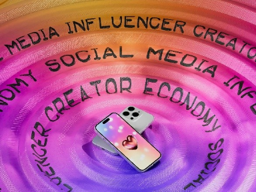
Creator economy illustration with a smartphone

Key person risk. When a brand is tied to a creator, the platform inherits that creator’s liabilities, and their shelf life. Attention is fickle, and today’s star can burn out in two or three years.

Leakage. Every successful creator wants 100% of the value. Once a platform proves their concept, the best ones have every reason to leave.

Commitment. A platform can automate the backend, but not the creator. If a creator stops promoting their restaurant or travel vertical, the infrastructure sits idle.

Saturation. When launching a brand costs near zero, the marketplace floods with AI-assisted menu variations, the novelty wears off, and the trust premium slides back into advertising noise.

The Commander didn't need a platform or a revenue share to turn two fans into "his boys." He needed a bar, a bartender and a round of shots. That's the part no AI can generate and no robot can assemble. Wonder and LOST iN are building the kitchens and the printing presses.

The creators who win will be the ones who remember to buy the round.

It takes a village!

Group selfie at a bar
 

Your next regular is on Roku

Roku Ads Manager: Reach your next customer with streaming TV ads

Empty tables cost you revenue you can't get back. Casual diners are already streaming on Roku, and self-serve CTV ads from Roku Ads Manager help you reach them in every market, down to the ZIP code. The result: more diners tonight and more repeat customers over time.

Sign up today
 

YOUR WEEKEND LISTEN

The Hospitality Hangout

The Hospitality Hangout: Krispy Kreme Is Making It Harder to Pass Up a Doughnut

A new doughnut gets your attention. Then the Original Glazed ends up in the box, too.

SpotifyApple PodcastsYouTube MusicAmazon Music


THE DEAL ROOM

The Data Is the Moat

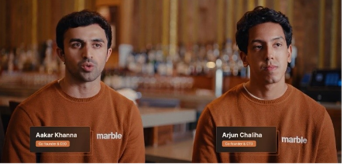
This week, Marble, a five-month-old restaurant tech startup, raised a $5.5mm seed round to automate the back of house with AI.

Here are a few numbers (only a few b/c I know you’re still on your first cup of coffee).

  • $5.5mm seed, led by Contrary (an early DoorDash investor), with participation from Y Combinator, Sweetgreen co-founder Jonathan Neman, and angels tied to OpenAI, DoorDash and Momofuku.
  • Five months old, and per Restaurant Business, on track to cross $1mm in contracted revenue, with several active customers and at least two well-known brands planning to join.
  • 70% to 80% less time spent counting inventory, according to co-founder Aakar Khanna. (That's the company's own number, so treat it as a claim until operators confirm it.)
The deal room

Here's how it works. Staff walk the walk-in and the dry storage and say what they see into a mobile app, which matches the counts against the restaurant's ingredient list. Then Marble's AI agent, Remy, drafts supplier orders, prep plans and staff schedules from historical sales, reservations, local events and weather. A manager reviews and approves.

The origin story is one every operator will recognize. Khanna traced the idea to his family's A&W restaurants in Canada, where supplies got ordered by feel. His verdict: "There is no way that is the right way to place an order."

He's right. Ordering by feel is how restaurants end up with a walk-in full of product nobody needs and an 86'd special on a Friday night.

Now the context, b/c the context is the story.

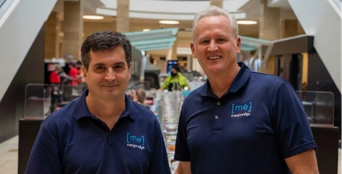
Every write-up of Marble's raise this week pointed to the same company as the established player in this space: MarginEdge. Full disclosure (and a proud one): MarginEdge is a Branded portfolio company, so weigh my enthusiasm accordingly.

In August, MarginEdge raised $80mm in a mix of Series D equity and debt, co-led by Schooner Capital and Ten Coves Capital, with existing investors Osage Venture Partners, Derive Ventures and Western Alliance Bank joining. Here's the scale behind that check (and just a few more numbers):

  • 13,000+ restaurants on the platform.
  • 40mm+ invoices processed, representing about $28 billion in purchasing volume.
  • $162mm raised to date.
  • An MCP connector, which MarginEdge calls the first from a restaurant management and bill payment platform, that lets operators query their own MarginEdge data in plain English from AI tools like ChatGPT, Claude and Gemini.

So, put the two raises side by side. A brand-new company gets $5.5mm to pitch an AI agent that does the work. A ten-year-old company with 13,000 restaurants gets $80mm to build AI on top of 40 million invoices. Same back office, two different bets.

Here's the pattern and why I wanted to focus on Marble and MarginEdge in this week’s Deal Room.

Last week's capital story was that money is out there, but it's selective. This is where it's going. The back office (inventory, purchasing, invoices, food cost) is where restaurants quietly win or lose their margin. It's also where AI has the most obvious work to do, b/c so much of it is still clipboards, spreadsheets and gut feel.

And here's what I'd want every investor and operator to take from this week. An AI agent is only as good as the data underneath it. Remy can only draft a smart order if it knows what you actually paid for chicken thighs last week, what came in short on the truck, and what the price did over the last six months. That's invoice data. That's purchasing history. That's exactly the asset MarginEdge has spent a decade building, one invoice at a time.

It's the same lesson from this morning's Top of the Fold. When AI makes the clever part cheap, the moat is what AI can't easily produce. For creators, it's trust. For restaurant software, it's clean, real, operator-verified data.

So, no, I don't see this as a threat. I see it as validation. When Contrary, YC and the co-founder of Sweetgreen all put money into AI for the back of house, it tells you the category is real. A rising tide lifts all boats, and plenty of restaurants are still running on clipboards.

Congratulations to Aakar Khanna, Arjun Chaliha and the Marble team, and a tip of the cap to Bo Davis and everyone at MarginEdge, who've been doing the unglamorous work of getting restaurant data right for a decade.

The takeaway: The model is a commodity. The data is the moat.

The deal room
 

THE SHOUT OUT, POWERED BY ORACLE

If you’re Not First, You’re Last

You don't need me to tell you the math of the restaurant business. Margins are thin, competition is fierce and the headwinds are many. So every operator is hunting for the next real source of revenue.

Uber knows it. Last month, it agreed to buy ezCater for $2.3 billion in cash, b/c catering is a big, high-ticket business that adds to what a restaurant already sells. And as I've written in this space more than once, the tech platforms and the restaurants are competing for the same guest.

If you ain't first, you're last

Private dining and events have long been one of those meaningful revenue sources. Bigger checks, set menus, preorders and upsells. Perfect Venue says private events can deliver 2x to 3x better margins than a regular service. And every event puts your room, your food and your hospitality in front of a table full of people who may never have walked in otherwise.

But winning in private events takes infrastructure, and most restaurants underinvest here. The inquiry lands in a general inbox. It waits for the events manager, who's also running the floor. The proposal gets built in a Word doc, and the deposit comes in on a credit card authorization form. Meanwhile, the planner has moved on. According to Perfect Venue, planners reach out to 5 to 10 venues and book the first one that replies, not necessarily the best one. In private events, speed to lead is everything.

Perfect Venue logo

That's the problem Perfect Venue solves. It's an all-in-one platform for private events with three parts working together:

  • A marketplace that drives leads, putting your spaces in front of event planners.
  • A CRM built for hospitality, covering inquiries, availability, proposals, payments and reporting in one place.
  • An AI sales rep that helps close. Perfect Venue launched its AI more than three years ago, well before the current wave. Venues have accepted 350,000+ AI-written replies, which is roughly 30,000 hours saved at 5 minutes per email.

Restaurants make up 50% to 60% of Perfect Venue's customers. The rest are event venues, wedding venues, smaller hotels, breweries, wineries and distilleries. Customers report real lift: Barcelona Wine Bar says private event sales are up more than 60%, Gertie in Brooklyn reports a $50K boost in its first year, and Rubirosa in New York went from about three private events a week to two or three a day.

Full disclosure, and a proud one: Perfect Venue is Branded's newest partner company. But I want to be clear about the order of operations here. We were customers first. Acadia, Monterey and Isabelle's all run their private dining and events on Perfect Venue, and we've seen firsthand the lift it brings.

After winning with them as enthusiastic users, we did the next logical thing and asked how else we could get involved. That's this week's Shoutout, and the announcement of our partnership.

This morning's Top of the Fold ended with the Commander buying the round. Private events are where your guests buy the round for 40 of their closest friends. We want every one of our restaurant friends to win more of that business, b/c Perfect Venue drives it and helps you close it. Just make sure you're the first one to reply.

Welcome to the family, Luke Hutchison and the entire Perfect Venue team. You continue to help our restaurants win and now Branded wants to do the same for your company.

Perfect Venue: Here for the party!
 

WHAT WE'RE READING THIS WEEK

⚾ The Legal ‘Nuclear Option’ That Threatens to Upend the Baseball Lockout – WSJ

🥃 The Surprising Secret Behind LALO Tequila's Best High-Proof Bottle Yet – Men's Journal

🥚 Are Egg Whites Better for You Than Whole Eggs? We Asked Dietitians – Real Simple

🎬 Robert Pattinson is the new James Bond -- from Batman to 007 – Los Angeles Times

🐰 Playboy to convert Freehand Hotel into members-only club – Miami Herald


THE B LIST

10 names to know this week

Know someone who should be on this list, or someone who'd want to see it? Forward this email or share it with your network!


MY POINT OF VIEW

Tequila

by Julie Zucker

Tequila

Years ago, a bartender friend gave me some great advice. He said, if you ever go to a dive bar (and use your judgment of what constitutes a dive bar accordingly), and you want an amazing drink, ask for a "yummy (insert spirit of choice) cocktail."

And that, my friends, is why, when I order a drink, I ask for a "Yummy Tequila Cocktail." But what does my drink order have to do with a podcast, Google, and the restaurant industry? Surprisingly, quite a bit. (And yes, I promise there's a business lesson somewhere in here.)

This past week, I attended the Google Restaurant Influencer Summit, where one statistic caught my attention: searches for the Hugo Spritz were up a whopping 2,200%! And while my tequila-loving self was slightly disappointed that tequila wasn't the star of the show, it got me thinking about how consumers discover new products, what influences their purchasing decisions, and how restaurants can turn those insights into actual revenue.

Read this week's POV


THE INSIDERS

How Family-Friendly Restaurants Win Thanksgiving

How Family-Friendly Restaurants Win Thanksgiving

Thanksgiving week fills dining rooms with families. Brain science explains why parents experience the same meal differently, and how to win their loyalty.

By Melissa Hughes · Read the full piece

 
Google Just Told Us Exactly What Works in AI Search
 

That's it for today!
See you next week, same bat-time, same bat-channel.
It takes a village!

Jimmy Frischling
Branded Hospitality
[email protected]

235 Park Ave South, 4th Fl | New York, NY 10003

Branded Hospitality is a foodservice growth platform with three integrated business lines: Ventures, Solutions, and Media. We invest in innovative tech and emerging brands, provide expert advisory and capital strategies, and amplify visibility through podcasts, newsletters, social, and events, creating a powerful flywheel that drives growth, brand strength, and lasting success.

Looking to get in front of 400,000+ hospitality movers and shakers? Dive into our media kit and see how we can help amplify your brand.

HOSPITALITY HEADLINE