


|
||||||||||
|
Top of the fold
57 Restaurants (and Nothin’ On)
When more choice means less connection. — by Jimmy Frischling
|
||||||||||

Friends of Branded! Happy Saturday and I hope you had a great week. I'm writing this from the Adirondacks, about 20 miles north of Lake George, where the cell signal is a rumor and the phrase "should we just order in?" is answered by laughter. There's no delivery up here. The restaurant choices are few, the kitchens close early, and if you roll into a restaurant at 8:45pm expecting to be served, you're likely to be directed to a nearby Stewart’s Shops (and for avoidance of any doubt, my family and I LOVE Stewart’s). The first night, mildly annoyed and genuinely hungry, I caught myself reaching for my phone out of pure reflex, as if an app could conjure a table out of the pines. It couldn't. And that's when I heard my daughter's voice in my head. When she was in kindergarten (she's nine now, and wise beyond it), her teacher taught the class a line I've never shaken: "You get what you get, and you don't get upset." Up here, that isn't a philosophy. It's the operating system. 
No, this week’s edition of the Top of the Fold isn't a travel diary or intended to be a contribution to Fodor’s Travel books, although if it was, I’d tell you Brant Lake, NY is my happy place and the Adirondack’s are one of the most beautiful and special parts of the State of New York (and yes, JB, that’s coming from a lifelong city kid). It's a question the mountains put in front of me, and I can't stop chewing on: has too much of a good thing actually made our relationship with restaurants better? B/c back home in New York City, it's the opposite of the Adirondacks and I’d say in many cities, a guest has something close to an infinite number of choices. There’s roughly one million restaurants in this country, and on a Thursday night (my writing night) a hungry person can scroll past a few hundred of them on a single app before they've even decided they're hungry. And that's just restaurants. There are more than 150,000 convenience stores now chasing the same dinner dollar with genuinely good food, grocery chains have built "grocerants" and prepared-foods halls that would embarrass a lot of full-service kitchens, and everyone from the gas station to the ghost kitchen is one tap away. On top of the options, we've stacked the channels. Order by app, by text, by DM, by QR code, by voice AI, by review, by chatbot. More ways to eat, and more ways to talk to the people feeding us, than any generation in history. That should be paradise, right? The golden age for restaurants, right? So why does it so often feel like Springsteen's "57 Channels (And Nothin' On)"? 
Here's the uncomfortable science. There's a famous study out of Columbia University (led by Professor Sheen Iyengar) where researchers set up a grocery display of jam. When they offered 24 varieties, more people stopped to look, but they didn’t buy. When they offered 6 varieties, far more people actually made a purchase. The big display drew a crowd and sold almost nothing (about 3%). The small one sold ten times better (about 30%). Psychologists call it the paradox of choice. Past a certain point, more options don't free us, they freeze us, and they leave us less satisfied with whatever we finally pick, b/c we can't stop wondering about the 23 jars we passed on. Now lay that over our industry. When a restaurant is one swipe among 300, indistinguishable in a grid of thumbnails and star ratings, what exactly is the relationship? A great meal used to be an event you chose and looked forward to. More and more, it's a default you settle for and forget by morning. Abundance was supposed to make us better, but in plenty of cases, it's quietly making us interchangeable. That's the real risk hiding inside all this convenience, and it's a big one. 
We’re at genuine risk of commoditizing hospitality, of turning a relationship business into a vending machine with nicer lighting. And the digital layer, the thing that was supposed to deepen the connection, often thins it out instead. A chatbot is not a host. A push notification is not a regular being remembered. Ten ways to reach a restaurant is not the same as one restaurant that actually knows you. We confused access with intimacy, the same way we recently confused reducing labor with building better businesses (last week’s Top of the Fold). And it isn't only the guest drowning in all this abundance. Look at the operator's side of the same coin. To be findable in a world of infinite options, a restaurant is now expected to be everywhere at once: on every delivery marketplace, every review site, every social feed, running a promotion on each, paying a commission to each, and feeding an algorithm that rewrites the rules every quarter. That's a tax on both attention and margin, and it quietly pulls a team's focus away from the one place it actually compounds, the guest standing right in front of them. Chasing omnipresence is its own kind of commoditization, and a lot of good operators are exhausting themselves trying to win a game that only the platforms were ever built to win. But here's the flip side, and it's the part the mountains handed me. Constraint creates appreciation. Up here, the one diner that’s open past eight, the counter guy who remembers you ordered the same thing yesterday, the pie that's the only pie, becomes the highlight of the day instead of a line item you barely register. Scarcity does something abundance can't. It makes the thing matter. "You get what you get, and you don't get upset," it turns out, is often the fastest route to actually enjoying what's in front of you. So, what's the takeaway for those of us who build and back restaurants and these digital businesses? The winning move was never to be one more option on the infinite menu. It's to be irreplaceable. You don't beat commoditization by being available everywhere. You beat it by being worth choosing on purpose. That means leaning into the things that stubbornly refuse to scale to infinity: a point of view, a room with a soul, a team that treats a guest like a name and not a ticket, food that tastes like somebody meant it. Curate, don't just add. Be a destination, not a default. Abundance is a gift, and I'm not romanticizing the days of three options and a busy signal. But the job of this industry was never to be everywhere. It was to be worth returning to. The restaurants that remember that, the ones that give a guest a reason to stop scrolling, will never get commoditized, b/c you cannot commoditize a place people actually love. The rest? Well. You get what you get. It takes a village! 
|
||||||||||
Your weekend listen
|
||||||||||
|
Happier Employees. Happier Guests.

Give your hotel or restaurant team access to their earned wages before payday*. Overcome hiring shortages and boost shift compliance with the gold standard in modern pay.
Book a Demo
|
||||||||||
|
Kill the QR Code

You're watching a spirits show, a bottle of Campari catches your eye, and instead of grabbing your phone, hunting for a QR code, or opening three tabs to track it down, you just buy it. Right there. On the screen. By remote. That's klyq™, the newest app from NBTV, and it went live nationwide this month. Full disclosure, and it's a happy one: NBTV is a Branded portfolio company. So is the second company in this story, but I'm getting ahead of myself. klyq ("Don't Just Watch. klyq.") is powered by NBTV's patented Buy Bar™ technology, which turns the video itself into the storefront. No QR codes, no friction, no off-platform searching. You discover and purchase directly on-screen. NBTV's CEO, Nick Buzzell, describes the vision as the "Mall of the Television," pulling high-intent categories like spirits, golf, pets, travel, beauty and food into one interactive marketplace. After proving the model with early work on Vizio and Apple, klyq just landed the partner that gives it real scale. Samsung. 
That's the headline. klyq is rolling out across Samsung's connected-TV footprint, more than 85 million TVs in the U.S. (with 200 million-plus worldwide to follow), featured right on the home screen. For the first time, the Samsung home-screen ad itself is shoppable. Power on the TV, see something you want, buy it by remote. The Campari launch campaign is already live if you want to watch the Buy Bar do its thing. Now the part I love most, b/c it's Branded family. Building out klyq's travel vertical is Hyperfunnel.ai, led by CEO Ashwin Kamlani, and yes, also a Branded portfolio company. When two of your portfolio companies decide to build something together, that's a good day at the office. Hyperfunnel is producing and curating the travel experiences inside klyq (shoppable series, hotels, cruises, destinations) and layering in a voice-AI concierge, so before long you'll talk to your television, and it will book the trip. The travel vertical launches this fall. Here's why this matters beyond the gee-whiz. or years our industry has tossed around "shoppable" and "engagement" while the actual path from content to purchase stayed clunky. klyq collapses that path to zero. For any brand in food, beverage, travel or hospitality, that's the holy grail: attention converted into a transaction without the guest ever leaving the couch. And for the rest of us, it's a real look at where content and commerce are heading, on the biggest screen in the house. Two Branded companies, one Samsung-sized stage. Don't just watch. → klyq.tv If you'd like to discuss what Branded is doing with NBTV or how you can get involved, please click here or contact me directly. 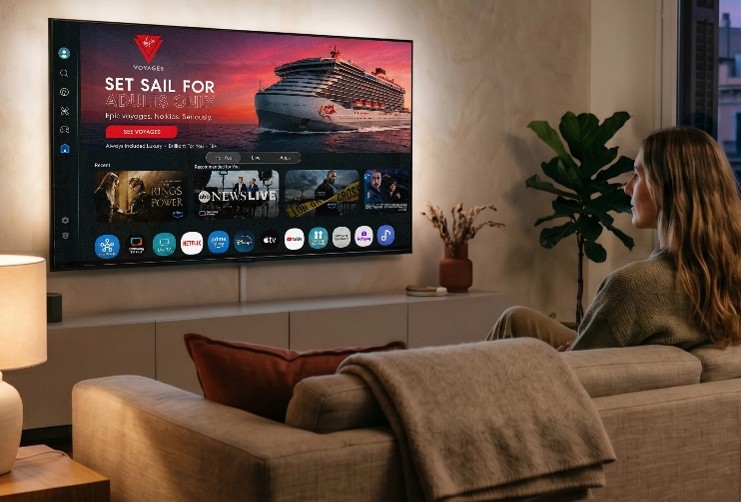
|
||||||||||
|
NetSuite Meets AI: Practical Lessons and Strategies

AI is reshaping financial operations in NetSuite, delivering practical gains for finance teams and IT leaders. This guide, authored by industry expert Tim Dietrich, explores actionable strategies for adopting AI responsibly, from prompt-driven financial analysis to purpose-built AI agents and proven governance frameworks.
Get Your Guide
|
||||||||||
|
What we're reading this week
|
||||||||||
|
Things That Make You Go Hmmmm...

No specific deal this week, just Branded doing what we do: watching the action in our industry, coffee in hand, and channeling our inner C&C Music Factory. Two headlines, one beloved brand, landing in the same week, and side by side they make you go hmmm. The brand is Portillo's, the cult Chicago icon that started as a single hot dog trailer in 1963. Italian beef dripping down your wrist, char-grilled dogs dragged through the garden, a chocolate cake shake that has no business being that good. It comes out of one of America's great food cities, and people genuinely drive hours to stand in its lines. By every measure of love, Portillo's is an A-lister. Story one: this week Portillo's laid off about 18% of its corporate staff at its Oak Brook headquarters (roughly 140 people work there), plus some field roles, for a $1.1 million restructuring charge. No restaurant jobs were touched.
Story two: a day earlier, it named a new CFO, Kevin Kalicak, who spent nearly 30 years at Darden and ran finance for Olive Garden's 900-plus restaurants and $5 billion in sales. He replaces Michelle Hook, who left in May to become Shake Shack's CFO. Hmmm.
Which brings me to a trend I can't stop noticing: restaurant CFOs have become the industry's hottest free agents. Look at the last few months alone. Portillo's poaches from Darden. Its outgoing CFO jumps to Shake Shack. Golden Corral brings in a Nestlé veteran to run its books. First Watch names a new finance chief. Domino's and Panera have both installed new CFOs. That is a lot of musical chairs in a very short window, and the pattern inside it is the tell: the talent is flowing out of the most disciplined operators in food (Darden, Nestlé) and into growth chains that suddenly need exactly that skill set. The marquee signings this cycle aren't celebrity chefs or a hot new concept. They're the people who own the P&L. Ask why now and the answer writes itself. Comps are soft, capital is expensive, commodity inflation is real, and the market has stopped paying up for growth that doesn't reach the bottom line.
In that environment, the most valuable person you can hire isn't the one who dreams up the next location. It's the one who can defend a margin, discipline an expansion plan, and tell a credible equity story to Wall Street. When the CFO becomes the franchise player, you know the game has shifted from top-line ambition to bottom-line survival. The front office, not the menu board, is where this season gets won.
Now back to Portillo's, b/c it's living that shift in real time. The backdrop is a "strategic reset" that began last fall, when Michael Osanloo resigned after seven years and Brett Patterson took the top job in February. The numbers explain the urgency. In Q2, revenue grew a respectable 5.6% to $199 million and the footprint reached 109 restaurants, but same-restaurant sales slipped 1.2% and net income fell to $7.2 million, down $2.9 million from a year ago. Operating margin dropped to 6.9% from 9.3%. And after an aggressive Sunbelt push (all eight of this year's openings were in Texas) underdelivered, the company scaled the expansion back. Now it's planting flags closer to home instead: a flagship on Michigan Avenue this quarter, Wrigleyville next year. So, what's the pattern worth watching? Portillo's is the purest test in the market of a question every regional darling with national dreams eventually faces: is being beloved enough? The honest answer is no. Love gets people in the door. It does not automatically produce same-store sales in a Houston suburb that has never had an Italian beef and isn't yet sure it wants one. The very things that make a cult brand magic (locality, scarcity, hometown mystique) are the hardest to ship to a new zip code. So, Portillo's is doing the grown-up thing: cutting costs, slowing down, and hiring an operator who has run finance at ten times its scale. To be clear, this is not a stock call. Branded doesn't do buy or sell, and we're rooting hard for Portillo's, b/c a great American brand deserves to win. What we're watching is the bigger story its two headlines point to: an industry that has decided the person guarding the bottom line is now the most valuable free agent on the board, and a beloved brand trying to import that discipline without losing the soul that made it worth loving in the first place. Adoration gets you invited in. The right CFO, it turns out, is who keeps you in the room. Great food is necessary. It turns out it isn't sufficient. And that, friends, is a thing that makes you go hmmm.
If you're interested in exploring Branded's deal flow and opportunities to engage with our Branded Capital team, please click here or contact me directly.
| ||||||||||
|
The b list
10 names to know this week
Know someone who should be on this list, or someone who'd want to see it? Forward this email or share it with your network!
|
||||||||||
|
My point of view
by Julie Zucker
|
||||||||||
|
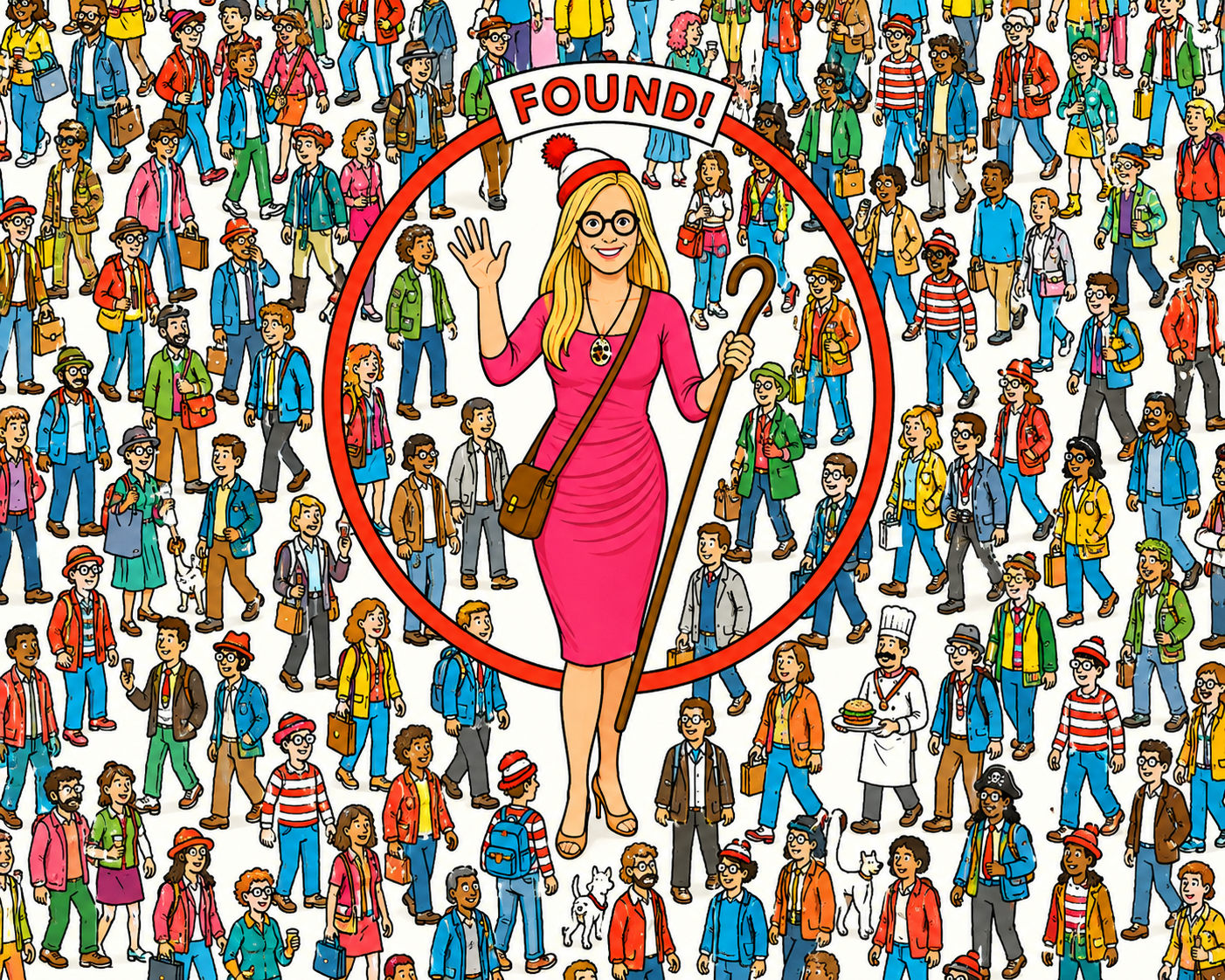
Confession time: I don't really buy clothes anymore...I rent them. My closet has basically become a revolving door thanks to Rent the Runway and Nuuly. Dresses come in. Dresses go out. Repeat. Sure, I love a good outfit, but my obsession isn't really about fashion. It's about being found. As someone who's constantly hosting parties, wrangling podcast guest, attending dinners, and planning events, I'm usually the person someone is looking for. My answer to "Julie, where are you?" is almost always the same: "Look for the brightest dress in the room." But this isn’t about me…restaurants have been solving this exact problem for years...just with uniforms instead of hot pink dresses. The best hospitality isn't about matching polos or perfectly pressed aprons. It's about removing friction, creating recognition, and making it easy for guests to connect with the people who can help them. The uniform may make someone recognizable, but it's the personality inside it that makes them unforgettable. |
||||||||||
|
The insiders
|
||||||||||
|
||||||||||
|
||||||||||
|
||||||||||
|
||||||||||





See you next week, same bat-time, same bat-channel.
It takes a village!
Jimmy Frischling
Branded Hospitality
[email protected]
