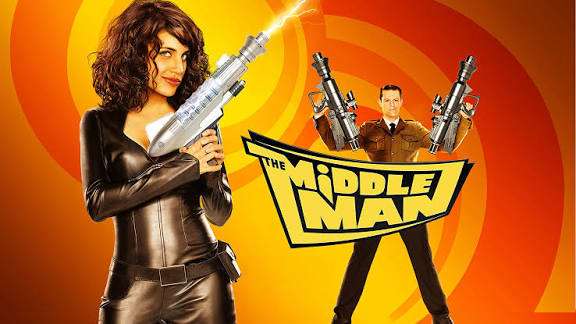
| | TOP OF THE FOLD | | 86 the Middleman | Olo just launched a consumer app, and it's about to teach 40 million people something restaurants already know.
by Jimmy Frischling |
 | | Friends of Branded! | | Happy Saturday and I hope you had a great week. | | A few times a year I have the privilege of guest-speaking at Professor Stephen Zagor's Food Entrepreneurship class at Columbia Business School (my nephew is going to send me a note questioning whether or not this is an example of a humble brag. For avoidance of any doubt, I believe (hope) that it is NOT). | | B/c I see new faces every semester, between us, means I get to recycle my best material (I once pulled the same move at a wedding when I got ambushed into giving a spontaneous toast, but that's a story for another time, or probably never). | | At these talks, I like to open with a little restaurant trivia, with Branded baseball caps going to the first correct answer to each question. |
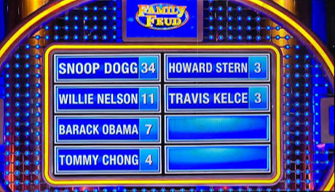
 | | Softball first: what does "86" mean in a restaurant? Answer: We're out of it, kill the order. | | Then a notch harder: which of these has the most locations on earth, McDonald's, Starbucks, Subway, or KFC? Answer: Half the room still says Subway out of habit, but the crown has quietly passed to McDonald's at roughly 43,000 doors. | | Then a finance question (b/c these are business school students and I can't help myself), and the one that actually makes the room go quiet. Which of the following has the largest market cap: Chipotle, Domino's, Starbucks, or DoorDash? Answer: Starbucks is the biggest at around $110 billion, sure. But here's the gut-punch: DoorDash, a company that does not own a single kitchen, is worth about $83 billion. More than Chipotle. Many times more than Domino's. The middleman is worth as much as the people who actually cook the food. Let that sit. | | Then I run the exercise that matters. Hands up, I ask, if you use a third-party app, DoorDash, Uber, Grubhub (which I still call Seamless, the same way I will go to my grave calling Citi Field "Shea Stadium"). |
 | | Every hand goes up, every time. | | Now the real question: do you use those apps for discovery or for execution? Pick one, you can't say both. I have been giving this talk for years (thank you Professor Zagor), and in all that time "execution" has never once lost. These students, like so many others, already know what they want. The app is just the pipe it travels through. | | And then my last question, the one almost nobody can answer: do you have any idea what that order costs the restaurant? Blank stares, every time. | | Let me be crystal clear before I go one sentence further. There will be zero third-party bashing in this column. Those platforms are genuinely important, they drive real volume and real services for countless operators, and plenty of restaurants would be worse off without them. But there is a cost to using them, often 15 to 30 percent of the ticket plus advertising, and the consumer tapping "place order" has no idea it exists. That information gap is the whole ballgame. | | Which brings me, finally, to the news and what I want to focus on here in the Top of the Fold. | | This week Olo launched its own consumer-facing ordering app (and full disclosure, Olo is a Branded partner, so please weigh my enthusiasm accordingly). Olo is calling it "second-party" ordering, and I think the name is the best way to understand the whole thing, so let me define the field. |
- First-party is the restaurant's own app or website: best economics, but brutally expensive to get anyone to download and even harder to keep them engaged.
- Third-party is the marketplace, DoorDash and the like: incredible reach and convenience, but you surrender margin and you rarely learn who your customer is.
- Second-party is Olo's attempt to split the difference: marketplace-style reach, direct-channel economics, and the customer relationship stays with the restaurant.
 | | Here's how the economics actually work, and this is the part worth reading twice. On Olo's app, the restaurant pays no marketplace commission and keeps the full profit on the order, plus the transaction data to recognize and market to that guest. The 5 percent fee is paid by the consumer, disclosed right at checkout, instead of the 15-to-30-percent menu markups baked invisibly into marketplace pricing. | | Our friend and Olo’s CEO, Noah Glass, cited one real example: an $85 delivery order that came in $19.34 cheaper through the Olo app than the same order on a marketplace, even after the fee. | | And here’s what I find incredibly important, this thing doesn't launch from zero. Olo's shared login already has 40 million guest accounts. The long-term goal Mr. Glass put out there is a billion orders a year. 😊 |
 | | Now, what's old is apparently new again, and here comes your Saturday-morning ResTech history. | | When SeamlessWeb launched back in 1999 (they didn't shorten the name to Seamless until 2011, and the Grubhub merger came in 2013), the original promise of the platform was simple and cheap access, low single-digit economics. Over twenty-five years, that friction crept from a few points to 15, 20, 30. | | In Olo's 2nd Party model, restaurant keeps its margin and the consumer pays a transparent nickel on the dollar. This seems more in the spirit and a return to the original deal. The wheel turns. It also matters that Olo did this right after going private with Thoma Bravo. As I wrote a few weeks back in the Top of the Fold article “Low and Slow,” patient capital and stepping off the 90-day treadmill can allow you to take a slow, unglamorous, network-sized bet that a public company serving those same restaurant clients could never justify. This is that bet. | | So let me answer the three questions I know are on your mind (or I’d at least like to bring to your attention). |
 | | First, what does this say about the state of the delivery market? | | It says the war has moved. Round one was about convenience and logistics, and the marketplaces won it decisively. Round two is about who owns the customer relationship and who controls the economics, and that is a very different fight. Olo's move is a bet that the market has matured to the point where the restaurant, not the middleman, gets to own the guest again. And its single most disruptive feature isn't the app at all. It's that 40 million consumers are about to get a transparent look at the economics for the very first time. Sunlight is the product. | | Second, how big a threat is this to DoorDash, Uber, and the third parties? | | Real, but aimed, and not fatal. The marketplaces' moat is discovery, courier scale, and raw habit, and it is enormous. DoorDash's user base dwarfs 40 million. Olo is not going to out-discover anyone. But remember the classroom: people use those apps for execution, not discovery. And execution is exactly the layer where the marketplaces add the least incremental value while charging the most. If even a slice of those "I already know what I want" orders moves to a cheaper, restaurant-aligned rail, that doesn't kill DoorDash or Uber, but it does something that’s arguably scarier to them: it pressures the take rate and exposes the economics. | | The threat here isn't to the marketplaces' existence. It's to their pricing power. | | Third, and the one operators actually care about: is Olo's app a friend, a frenemy, or an enemy of restaurants? | | This is a simple one, the answer is a friend, and clearly the friendliest model on the board, but keep your eyes open, b/c no intermediary is a saint (not even our friend Mr. Glass and the Team at Olo). Olo is offering the most restaurant-aligned economics out there: you keep your margin; you keep your customer. | | But Olo is still a platform with its own scoreboard (GMV, a billion orders), and here’s the thing I need every operator to hear. Lower cost to the restaurant is not going to drive consumer behavior. I work with first-party platforms, and I promise you, you cannot guilt a human being into ordering direct to save you a few points. They don't know your P&L and they don't owe you their loyalty. The only thing that moves them is a better experience and an honest value proposition that makes you the genuine preference. | | Olo just handed you a dramatically better rail to run on. It did not hand you the one thing that was always going to be your job: earning the customer. | | So, here's the takeaway, and of course it lands on the P&L, b/c the take rate is the entire game. Every single point of commission is a point of margin, and margin is the difference between a restaurant that survives and one that doesn't. For twenty-five years that number only went up while the person paying for it had no idea. A platform that flips the model and, more importantly, shows the consumer the true cost, is the most interesting thing to happen to delivery in a long time. Use the better rail. Own your guest. And win them on experience, not on a cut of the bill they'll never see. | | Discovery or execution, pick one. Turns out the whole industry just had to. | | It takes a village! |
 |
| | | Are loop timers giving you the whole story?
(Spoiler alert: they’re not) |
 | You can’t improve what you can’t accurately see and measure. Join the world's leading QSR brands in eliminating blind spots and bottle necks with full visibility into every part of the journey with Fingermark’s Eyecue computer vision. |
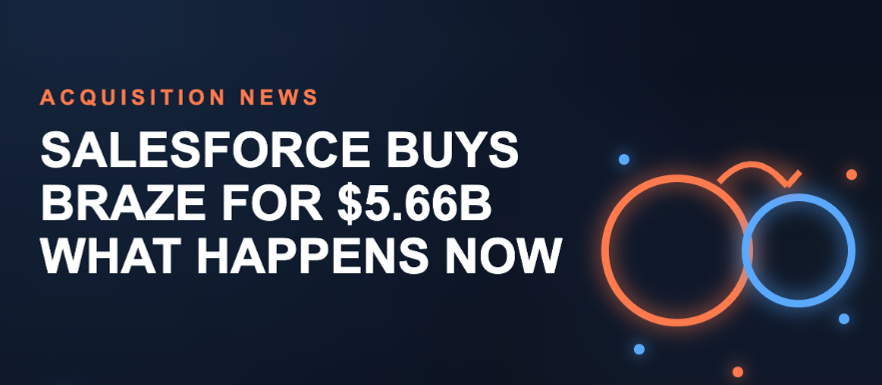
| | | THE DEAL ROOM | | The $5.7 Billion Hello | | This week Salesforce agreed to buy Braze for roughly $5.7 billion. If you don't know Braze, your favorite brands do. It's an AI-powered customer engagement platform with around 2,770 customers, including such names as KFC, HBO Max, Venmo, and Canva. What Braze does is deceptively simple to say and fiendishly hard to do: it manages, automates, and personalizes messaging across every channel a customer touches (email, mobile app, web, SMS, WhatsApp) and uses AI to pick the right offer, the right channel, and the right moment for each individual person. | | For the deal watchers keeping score, this is Salesforce's eighth acquisition this year. |
 | | So, there are three things worth pulling out of this, and the third one is the one I really want you to sit with. | | First, the obvious one: the consolidation of tech platforms is not slowing down, it's accelerating. | | Salesforce is stacking Braze's real-time engagement engine on top of its existing architecture, Data 360, Customer 360, Agentforce, the whole cathedral, b/c the giants have decided the way to win is to own every layer of the customer relationship under one roof. The big are getting bigger, and MarTech is collapsing into a handful of mega-platforms. That trend is now a freight train. | | Second, and more important: look at what they actually paid for. | | Salesforce just spent the better part of $6 billion in cash, not on a factory, not on real estate, but on the ability to talk to customers in a personalized, automated, intelligent way across channels. Read that as the loudest possible signal that knowing your guest and reaching them with the right message at the right moment is no longer a marketing nicety. It is mission-critical, and it now commands billion-dollar prices. As Salesforce's Patrick Stokes put it, "every interaction is an opportunity to wow your customers," and "most of that wow comes from knowing your customer, and responding at just the right moment." That is the whole thesis of the deal, and it lands directly on your P&L, b/c personalization is just a fancy word for frequency, retention, and lifetime value. | | Salesforce didn't buy software. It bought the machinery to manufacture "wow" at scale, and wow is the thing that brings the guest back. |
 | | Third, and this is the one to sit with: ask why Salesforce needed Braze at all. | | It already had the data, the AI, even a loyalty product. What it didn't own was the thing that actually sends the message, and an AI agent can't run a guest relationship when the data, the loyalty program, the decision, and the send live in four different products. So Salesforce paid $5.7 billion for the last piece. | | Now let’s look at a restaurant brand's stack. Braze is the CRM piece. To use it you also need a loyalty platform, a CDP, an app and ordering provider, and something to run your offers. Five vendors, five logins, and one customer journey mean a segment here, an offer there, the emails and the journey in Braze, and hoping it all lands in the app. Salesforce just spent $5.7 billion to get out of that world. | | The thing that has changed, and changed dramatically, is that this capability is no longer locked behind an enterprise budget. | | You do not need to be Salesforce, and you do not need to spend $5.7 billion, to know your guest, automate your outreach, and personalize your offers. For a fraction of the price, mid-market and emerging multi-unit brands can now have the whole stack, loyalty, ordering, offers, CRM, and a customer data platform, all in one, built AI-native from the ground up. | | Which is exactly where this week's Deal Room hands off to the Shoutout, b/c that platform has a name, Hang. In full disclosure, Hang is a Branded partner company, and I can’t wait to tell you more about it in the Shoutout section below. | | The takeaway for The Deal Room this week is simple. When the smartest enterprise-software company on earth pays almost $6 billion to get better at personalized guest engagement, that's the market telling you where the value is. The capability has been democratized. The only question left is whether you're using it. The giants just told you what it's worth. The good news is you don't need their budget to get it. | | See you next in the Shoutout section. 😊 |
 |
| | | THE SHOUT OUT, POWERED BY ORACLE | | Festivus for the Rest of Us | | Sixty seconds ago, I told you the restaurant version of what Salesforce just paid $5.7 billion for already exists, for a fraction of the price. It does, and it's a Branded partner, so here's your Shoutout. | | Please meet Hang (hang.com). |
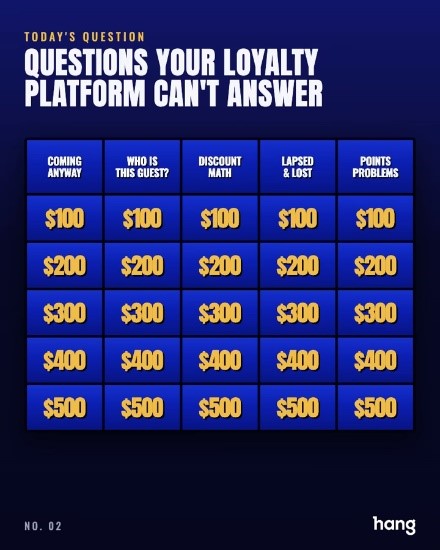
 | | Hang calls itself "the AI-native guest experience platform for restaurants," and the tagline is "every layer of guest engagement, one connected platform." | | That isn’t marketing fluff. It's the exact stack Salesforce just spent billions assembling, purpose-built for our industry and bundled into one place: loyalty, a custom app and ordering, personalized offers, a full CRM, gift cards, and a customer data platform that merges every order, visit, and preference into a single profile per guest. | | One platform that allows you to know the guest behind every order. | | Here's the core idea. The old way is segmentation: you draw a circle around 100,000 "lapsed" guests and blast them all the same $5 off. Hang's bet is that marketing should be “1:1,” not “1:many,” a different offer for each guest, generated automatically. And here's the thing every marketer knows, and nobody likes to say out loud: a lot of your offers get redeemed by guests who were coming anyway. Hang's AI figures out who was coming regardless and who wasn’t and uses each guest's price sensitivity and check size to build the offer that earns its keep: get the guest who wasn't coming in the door or bump the check on the one who was. It's pointed at incremental business, not redemptions. | | And here's what makes it special in practice. The AI isn't a bolt-on feature, it's woven through every layer, and b/c it's all one product, it doesn't hand you a to-do list. Remember the five-tab journey? Here it's one sentence, "win back the guests who haven't been in for 60 days without giving away the store," and it finds them, builds each guest's offer inside your limits, writes the emails and the texts, builds the journey, and puts it in the app. That's the flow Salesforce just bought the pieces for. Hang already runs it. But, and this is the part I love: you stay in control the whole way. Nothing sends until you approve it. Every AI offer lives inside the margin and discount limits you set, and you see the rationale and the projected cost before it acts. It plugs into the systems you already run on. | | The roster includes Just Salad, Jeni's Splendid Ice Creams, Firehouse Subs, La La Land, Killer Burger, and many others. The receipts: Jeni's is doing 6.6x the monthly loyalty revenue it did on its previous provider. Boba Guys grew net offer revenue 41%, after discounts and cannibalization. And my favorite, b/c it's the whole game in one line, Killer Burger drove 4.7x loyalty participation while cutting its discounting in half. | | So here's the bow on this week's edition of the Hospitality Headline. | | Salesforce paid $5.7 billion to put the data, the AI, and the messaging under one roof. | | KFC gets the messaging piece from Braze. | | You can get the whole stack from Hang, loyalty, CDP, CRM, and offers, all AI-native, for about what you'd pay for loyalty alone, and it starts with a free prototype. | | Go see it at hang.com. | | If you'd like to explore opportunities with Hang, please contact me directly. |
 |
| | | | | Know someone who should be on this list, or someone who'd want to see it? Forward this email or share it with your network! |
| |  | | Umm, like, you know what I mean? Actually, wait. As if! Before you think I’m Clueless, let me start over. Something has happened to me in my 30s + 12. My brain has turned to mush. Between raising two kids, working a full-time executive job, and juggling approximately 4,000 things at once, I've developed a serious case of brain fog. I used to make fun of my mom for calling me by my brother's name. Now I'm lucky if I get either of my kids' names right on the first try. But it wasn't just my memory that was suffering. Apparently, my mouth had developed a mind of its own. And, um, like, you know... I couldn't stop using filler words! | | Enter my Instagram algorithm (which apparently knows me better than I know myself) targeted me with articulation training apps. Six months ago, I traded seven minutes of bedtime doom scrolling and Candy Crush for something I never thought I'd be doing (or needed to do): articulation training. Yes, I am now playing games to teach myself how to speak. And you know what? It actually worked! Not only have I noticed a huge difference in how I communicate, but I've also developed a new superpower. I can hear EVERYONE ELSE'S filler words. And trust me, once you hear them, you can't unhear them. | | But what does my newfound obsession with eliminating "ums" and "likes" have to do with hospitality? More than you might think. In an industry obsessed with AI, automation, and technology, we're overlooking one of the most powerful tools we already have. Our voices. The art of conversation might just be one of hospitality's most underrated (and undertrained) skills. | | So, should restaurant operators be investing in articulation training? Can seven minutes a day really make a difference? And have I finally found a cure for my brain fog? I'm sharing what I learned, why I think the restaurant industry should be paying attention, and how a few well-chosen words can make all the difference. Read this week's POV by POZ. Because, ummm... wait, what was I saying again? |
| | | | | | | That's it for today!
See you next week, same bat-time, same bat-channel.
It takes a village! | Jimmy Frischling
Branded Hospitality
[email protected] | | 235 Park Ave South, 4th Fl | New York, NY 10003 | | Branded Hospitality is a foodservice growth platform with three integrated business lines: Ventures, Solutions, and Media. We invest in innovative tech and emerging brands, provide expert advisory and capital strategies, and amplify visibility through podcasts, newsletters, social, and events, creating a powerful flywheel that drives growth, brand strength, and lasting success. | | Looking to get in front of 400,000+ hospitality movers and shakers? Dive into our media kit and see how we can help amplify your brand. | | HOSPITALITY HEADLINE |
|
|